

Salt Lake City, UT—This July, playwright Carol Lynn Pearson passed away at 86, just three months before Plan-B Theatre opened the 20th anniversary revival of her play Facing East. The play grew from her own life and her own capacity for love. In her 1986 memoir Goodbye, I Love You, which turns 40 this year, she wrote about her husband, Gerald, coming out as gay, and about the friendship they kept after their marriage ended. When he was dying of AIDS, she brought him home and cared for him until the end. The book opened a conversation that many Latter-day Saint families had never been allowed to have. Gay men wrote to tell her it had changed their minds about ending their lives, and readers like Signature Books director Barbara Jones Brown credit it with making them allies. She remained a member of the church all her life, loyal to the faith while speaking openly about where it fell short for women and LGBTQ+ people. In the last volume of her diaries, she left a short poem for the people who loved her, asking them to hold her close for a little while and then plant her in the work they do best. Facing East is part of that work.
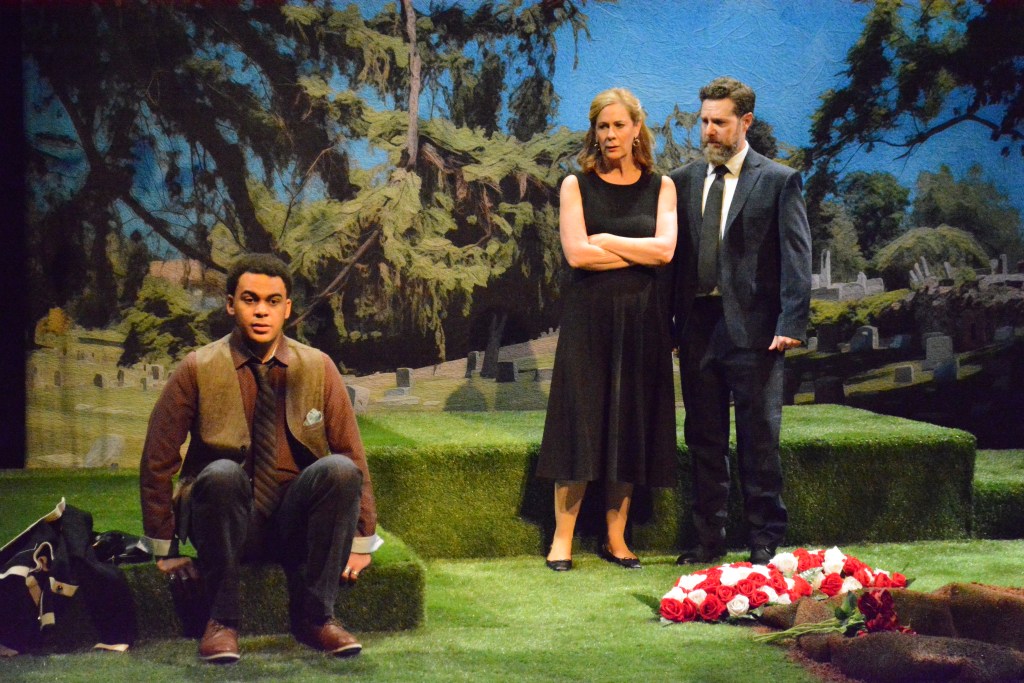
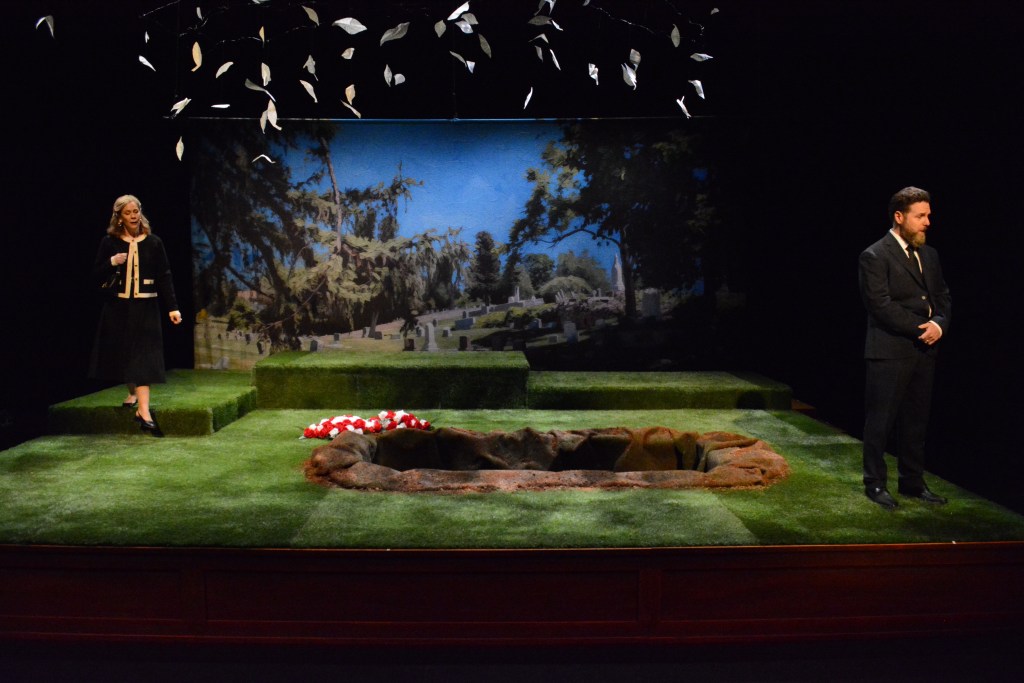
When you walk into the Studio Theatre at the Rose Wagner, the first thing you see is the cemetery. Janice Chan’s backdrop is a printed photograph of a real one on 11th Avenue in Salt Lake City, textured so it reads almost like paint, and people around me recognized it before the lights went down. Then you hear the dedication. At the performance I attended on October 18, director Jerry Rapier dedicated the performance to Pearson, to Bruce Bastian, who funded the original production, and to Charles Lynn Frost, the first Alex. And then there were the tissues. Plan-B staff offered them at the door, and they knew their audience. Behind me, someone cried through most of the show, and the sniffling rarely really stopped. I found myself hoping they had grabbed a few on the way in.

Plot
Ruth and Alex McCormick are a devout Latter-day Saint couple in Salt Lake City. Their youngest son, Andrew (Andy to his family), a 28-year-old cellist with the Utah Symphony, has taken his own life. After the funeral, Ruth wants to get back to the chapel, where the sisters have laid out the food and there are people to thank. Alex won’t leave the grave. The service was a lie, he says, and he wants a truthful one: who Andrew really was, and what his family did and didn’t do for him. Through memories, we piece together Andrew’s story: a returned missionary who spent years trying to change who he was, through therapy, prayer, and fasting, before he fell in love with a man his parents refused to meet. Then that man, Marcus, arrives at the grave, expecting everyone to be gone. For 70 minutes, the play never lets us leave that cemetery.
Performances
This revival carries its own history onstage. Jay Perry, who played Marcus, the son’s partner, in Salt Lake City, San Francisco, and off-Broadway, now plays the father, Alex. Andrew never appears as his own character. Instead, Alex, Ruth, and Marcus take turns becoming him in memories, so he exists only in the bodies of the people who loved him. We learn his story the way his parents do, piece by piece, moving back and forth between the graveside present and those embodied memories. It’s still the play’s smartest choice.
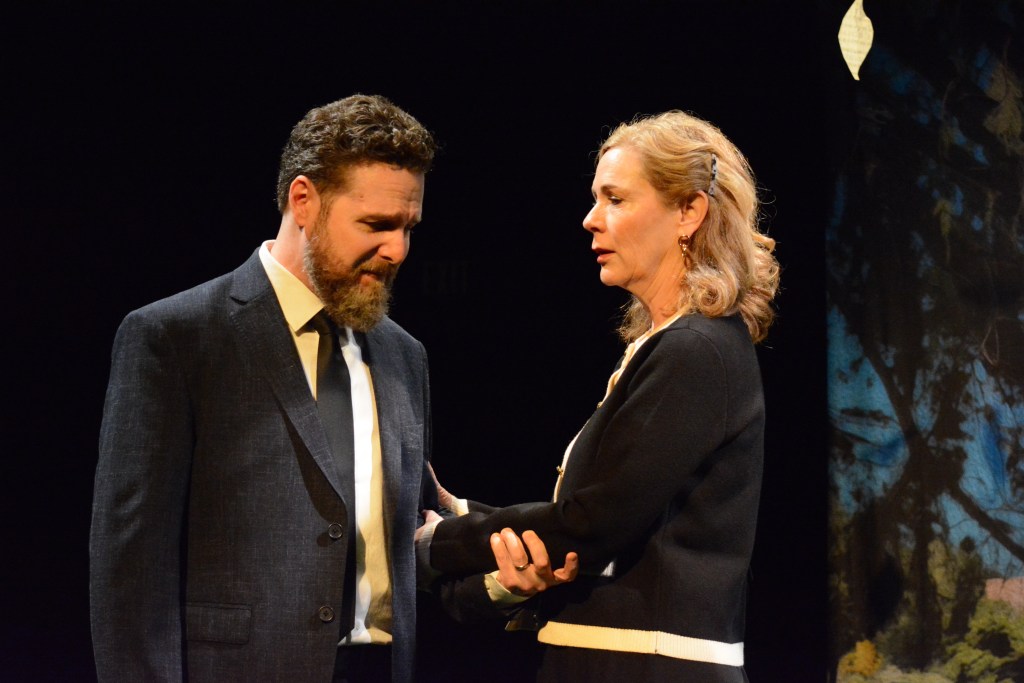
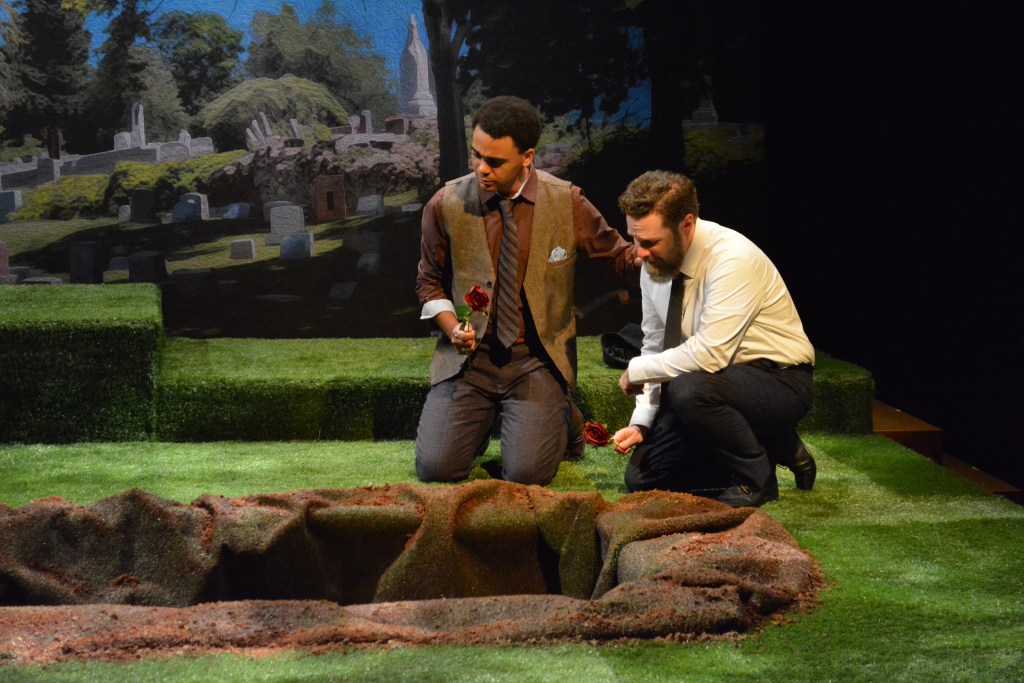
All three performances are authentic and layered. Perry snaps from raw grief into the bright “One-Minute Dad” radio voice and back again, and those whiplash shifts show his range. His final moment with Marcus is the evening’s quiet payoff, made richer by knowing Perry once stood where Kaplan Keener stands now. Christy Summerhays plays Ruth as a woman holding onto ritual like a handrail, getting through the funeral by going through the motions. Ruth takes a while to get there, and Summerhays makes us wait, so her softening near the end lands all the harder. Keener, an Ogden-based actor last seen at Plan-B in The Post Office, plays Marcus as a man who enters expecting an empty cemetery and keeps offering to leave (“I’ll come back”). Keener’s hesitation tells us everything about where Marcus stands with this family before anyone says a word.
Production
Beyond Janice Chan’s cemetery, the design is quietly effective. Paper birds folded from sheet music hang over the set, Andrew’s music taking flight above his grave. Emma Belnap’s lighting makes the leaves glow, and Cheryl Ann Cluff’s sound design, cello included, supports the play without pushing it.
Facing East is still relevant because, in Utah, LGBTQ+ Latter-day Saints still struggle to reconcile their faith and their identity. But there are moments where the play shows its age, and that’s okay. The music dates it most: Andrew’s touchstones belong more to his parents’ generation than to a young man today, even with the revival’s update that has him “download” a song. Rapier’s case for reviving it now is the political moment, with more than 500 anti-LGBTQ+ bills introduced in state legislatures this year. That case holds, even when the references don’t.
Analysis
One memory of Andy’s caught me off guard during the show. Young Andy explains that mongooses were introduced to Hawaiʻi to control snakes. I grew up on Hawaiʻi Island, and so I immediately caught it. Mongooses were brought in for rats in 1883, but rats come out at night and mongooses hunt by day, so native ground-nesting birds paid the price. I had to check with Artistic Director Jerry Rapier for this one. The swap is deliberate; Plan-B’s own study guide asks the same question. Andy is 12, half-remembering what he read, the same way Ruth keeps saying “that’s what I read.” Knowing that, the line works on a deeper level. It’s a wrong cure for a misunderstood problem, which is the whole play in miniature. The remedies Andrew’s family reach for (the reparative therapy, the fasting, his name on the temple prayer rolls) inadvertently end up harming the son they were meant to save.
Ruth’s own remedy comes in one of the hardest scenes to watch: Andrew with his mom in the cabin. She has taken him there while she weans herself off a painkiller, and she tries to use her own struggle to show him that he, too, has let something in that he needs to get rid of. She promises that he, too, will walk out of the darkness. Andrew answers simply: it doesn’t feel like darkness. Ruth’s reply is the most frightening line in the play: “Oh, my sweetheart. Neither did Percodan.” In that exchange, a mother’s love and a doctrine’s harm become impossible to pull apart.
For queer members, growing up in the church can be like breathing in Great Salt Lake’s toxic dust: life-giving and life-threatening at once. You can’t take the dust out of the air, and many people don’t even know it’s there, or don’t believe it is. That is the bind Ruth and Andrew are caught in at the cabin.
Facing East leaves you holding hard questions. What does it mean in Utah to have a queer child? And what does it mean to come to that realization as a member of the Church of Jesus Christ of Latter-day Saints? If you love your child, do you have to choose between your faith and your child? These are heavy questions to sit with during a show like this one, where a doctrine refuses to accept something as simple as loving another person, and where that love is said to cost not only your child’s eternal happiness but your family’s. I’m not here to answer those questions. But they are questions I have had to reckon with on my own.
In 2015, the church labeled members in same-sex marriages apostates and barred their children from baptism until 18, then reversed that policy in 2019, though it still calls same-sex marriage “a serious transgression.”
That history runs deeper than one policy. In the 1970s, Brigham Young University (BYU) researchers tested electric-shock aversion therapy on gay men; students were referred for similar treatment for years afterward, and the church has never apologized for it. When Andrew’s father lists “reparative therapy” in his honest obituary, he is naming something real. In 2008, a year after Facing East ran off-Broadway in New York, the church urged members to give time and money to California’s Proposition 8 against same-sex marriage. It has since said it opposes conversion therapy and in 2022 backed federal protections for same-sex marriage that preserved religious exemptions. For many queer Latter-day Saints and their families, though, the doctrine Ruth clings to hasn’t changed.
The stakes are not historical. In the Trevor Project’s most recent Utah report, 42% of LGBTQ+ young people said they had seriously considered suicide in the past year, and 11% had attempted it. More than half said they or their families had considered leaving Utah because of anti-LGBTQ+ politics and laws.
Facing East is an emotional 70 minutes, and it should be. Twenty years on, some of its references have aged, but its central question hasn’t: what does it cost a family to choose a doctrine over a child? And what might it cost you to choose your child instead?
Content note: Facing East deals with suicide and religious rejection of LGBTQ+ members. If you or someone you love is struggling, call or text 988, contact The Trevor Project (text 678-678 or call 866-488-7386), use the SafeUT app, or contact Encircle for LGBTQ+ youth in Utah.
Show info
- Play: Facing East by Carol Lynn Pearson
- Company: Plan-B Theatre (36th season)
- Director: Jerry Rapier
- Cast: Jay Perry (Alex), Christy Summerhays (Ruth), Kaplan Keener (Marcus)
- Creative team: Janice Chan (scenic), Emma Belnap (lighting), Phillip R. Lowe (costumes), Cheryl Ann Cluff (sound), Rebekah Joann Guerra (intimacy), Tahra Veasley (stage manager)
- Photography: Sharah Meservy
- More info: planbtheatre.org/facingeast
- Dates: October 22–November 8, 2026. Thursdays and Fridays at 7 p.m., Saturdays at 4 p.m., Sundays at 2 p.m.
- Venue: Studio Theatre at the Rose Wagner Performing Arts Center, 138 W 300 S, Salt Lake City
- Running time: 70 minutes, no intermission, no late seating
- Tickets: Sold out, with a waitlist. Tickets double as a same-day UTA transit pass.
- Accessibility: ASL-interpreted performance with a post-show discussion on October 24. The full script is available online.
About the playwright: Carol Lynn Pearson grew up in Gusher, Utah, and wrote more than 30 books of poetry, plays, and memoir. Goodbye, I Love You and her later No More Goodbyes: Circling the Wagons Around Our Gay Loved Ones made her one of the most important Latter-day Saint voices for LGBTQ+ members and their families. Facing East premiered at Plan-B in 2006. She died on July 29, 2026, at 86.
Waitlist: https://planbtheatre.org/waitlist/
Sources
- Plan-B Theatre: Facing East show page
- Jerry Rapier, “20 Years of FACING EAST” (Plan-B blog, June 10, 2026)
- Palak Jayswal, The Salt Lake Tribune, October 15, 2026
- Facing East Study Guide by Sharah Meservy, reviewed by Aliyah Bacca (Plan-B, A Week With A Play), includes the full script: https://docs.google.com/presentation/d/1fm2xxvlmgia1SS6d1cnGC8BLnCJdz_VuWSm9cr0Jl6Y/ — Plan-B Flickr album
- PBS Utah, Contact: Plan-B Theatre’s 20th Anniversary of Facing East


Leave a Reply