

Salt Lake City, UT—William Wordsworth enters Grasmere exactly as history has taught us to recognize him: thoughtful, principled, devoted to beauty, and quietly certain of his moral seriousness. He is a poet who believes in nature, in memory, in the redemptive power of language. He speaks gently. He listens attentively. He positions himself as a caretaker—of home, of family, of art itself. Nothing about him initially reads as dangerous.
The production opens with the cast speaking in an almost round-robin rhythm, voices passing between bodies with deliberate precision. Thoughts are shared, echoed, and completed as though language itself belongs to the room rather than to any single speaker. The effect is immediate and disarming: authorship is presented as collective before it is ever claimed as singular. By the time Wordsworth’s voice emerges as the one history remembers, the audience has already seen how thoroughly it is built from others’ words.
That sense of goodness—and of shared language—is carefully and deliberately shaped in Voodoo Theatre Company’s production, directed by Tracy Callahan. Her direction allows Wordsworth’s harm to surface gradually rather than through overt dramatization. He is not presented as a villain, but as a man sincerely convinced of his own kindness—and therefore unable to recognize harm even when it is clearly named.
The play returns to this shared vocal structure at its close. Once again, the cast speaks together, completing one another’s sentences in a controlled, breath-matched cadence. But what initially felt collaborative now reads as haunting. Language still circulates among the group, but authorship has calcified. The round-robin no longer suggests possibility; it underscores what has been taken, absorbed, and left uncredited.
Grasmere is not interested in redeeming Romantic mythology. Instead, Kristina Leach’s play quietly dismantles it, reframing the poet not as a misunderstood genius but as someone whose art depends on long-standing patterns of exploitation that cultural reverence has made easy to ignore. The play ultimately asks not whether the poet loved deeply, but who bore the cost of that love—and why history has been so willing to look away. Its intervention is not to unmask a hidden villain, but to show how easily goodness, when paired with entitlement, becomes a source of harm.
Context
Originally written in 1998, Grasmere has lived a quiet but persistent theatrical life, with productions across professional, university, and fringe contexts, including a professional staging at Cherry Lane Studio in New York with the Chautauqua Theatre Alliance. Voodoo Theatre Company’s January–February 2026 production marks the play’s first known Utah staging, situating this intimate historical meditation within a close, actor-driven space where ethical questions register not as abstraction, but as lived tension.
That intimacy is essential to this production’s success. Callahan—recently retired after more than thirty years teaching Acting and Directing at Weber State University—approaches Grasmere less as a period drama than as a sustained ethical inquiry. Her direction privileges accumulation over emphasis, allowing glances, silences, and domestic rhythms to carry the weight of power. The home is not a pastoral refuge here, but a regulating structure—one that organizes who speaks, who waits, and who remains.
Performance Highlights
The cast brings exceptional clarity to Leach’s critique, approaching character not as psychology alone but as a position within a system. Together, these four performances form a rigorously balanced ensemble—one in which no role dominates, and each actor’s precision sharpens the others’. The result is a production carried not by a single standout, but by four performances of uncommon discipline.
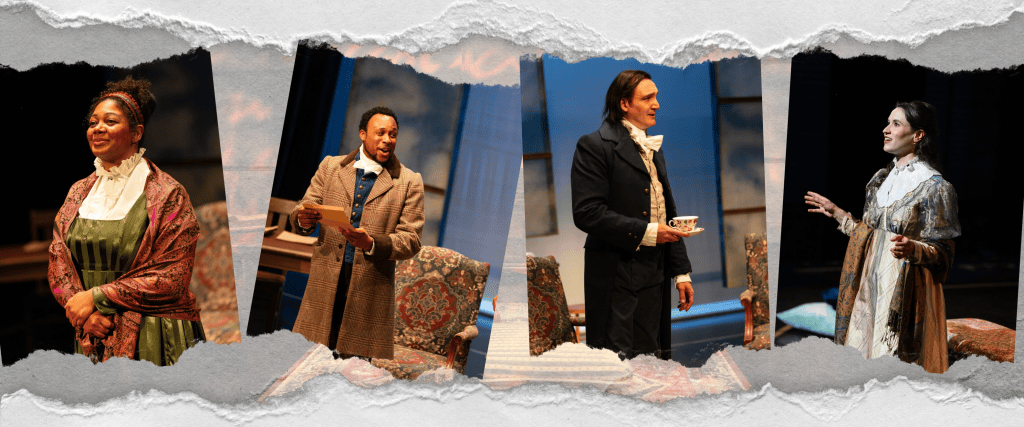
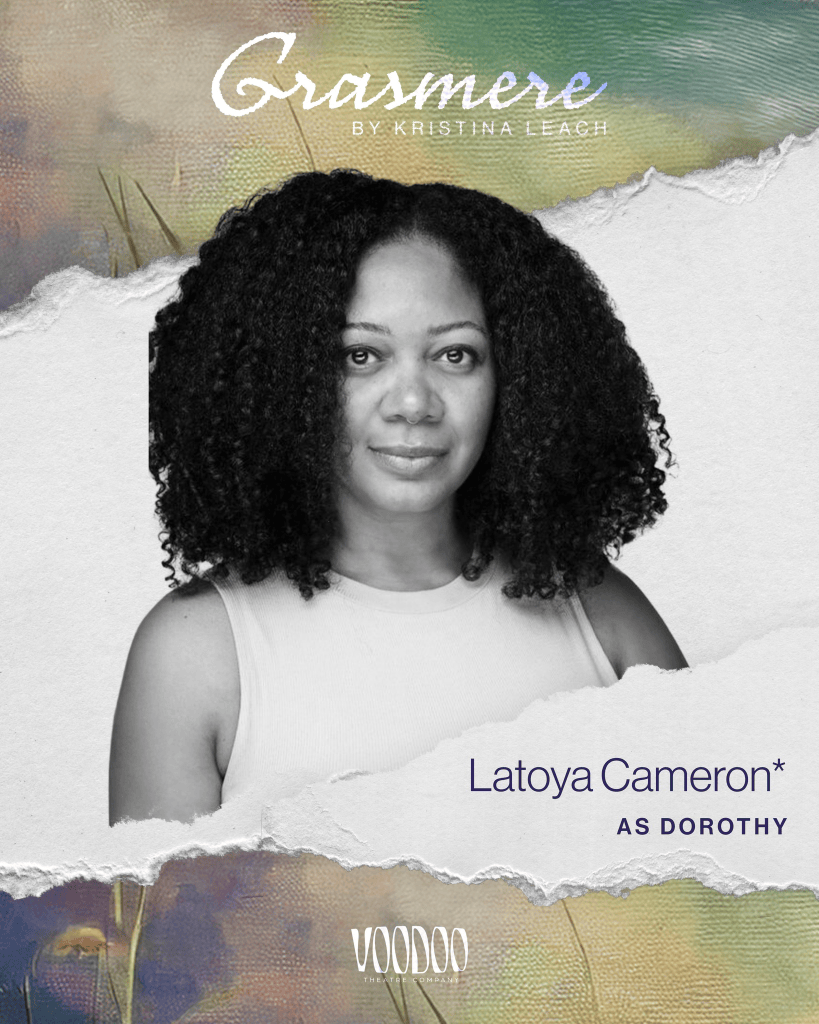
Latoya Cameron anchors the production as Dorothy Wordsworth, delivering a performance defined by attentiveness, restraint, and cumulative force. Cameron’s Dorothy is not fragile or confused; she is perceptive, absorbing the household’s dynamics long before she can name them. When she finally asks whether she has been kept “only to give [him] words,” the line lands as an indictment rather than a plea. Cameron makes visible the labor of being essential without recognition—and the devastation of realizing that devotion has been mistaken for destiny.
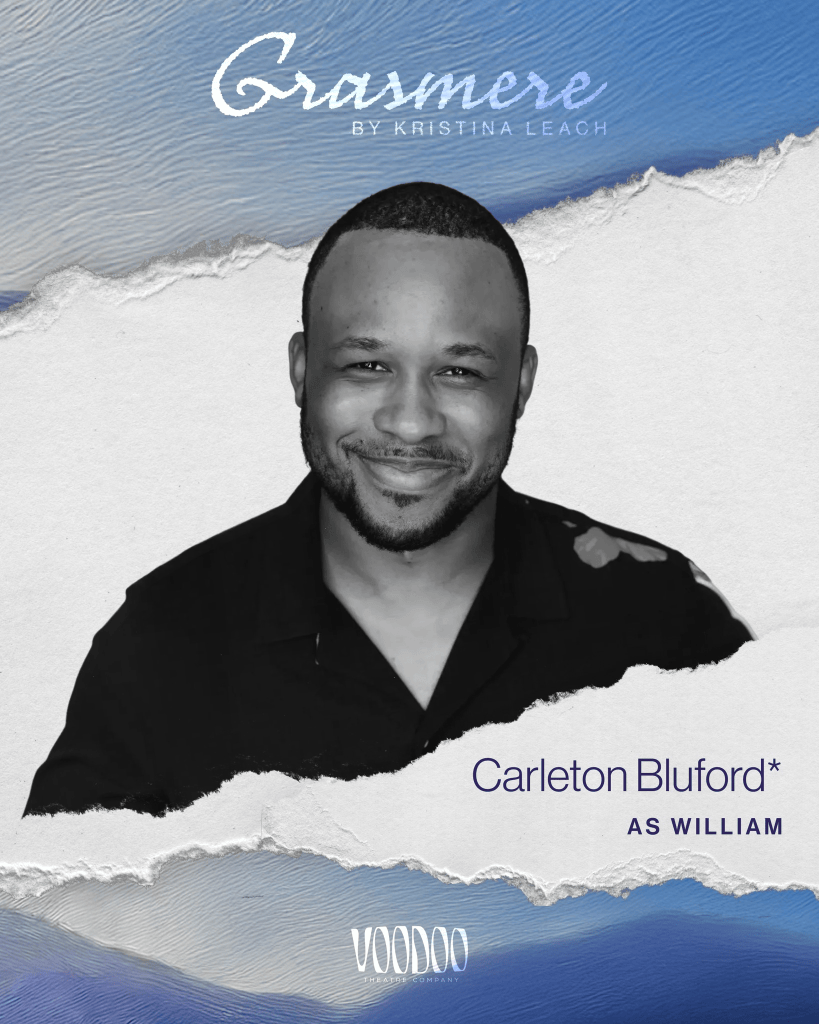
Opposite her, Carleton Bluford embodies a William Wordsworth who is composed, gentle, and devastatingly certain. Bluford resists any trace of theatrical villainy, instead offering a poet who sincerely believes in his own care and goodness. That belief becomes the performance’s most chilling feature. When Wordsworth promises protection—when he insists he will “keep” Dorothy “safe”—Bluford allows the language to sound sincere, forcing the audience to confront how easily care slides into possession.
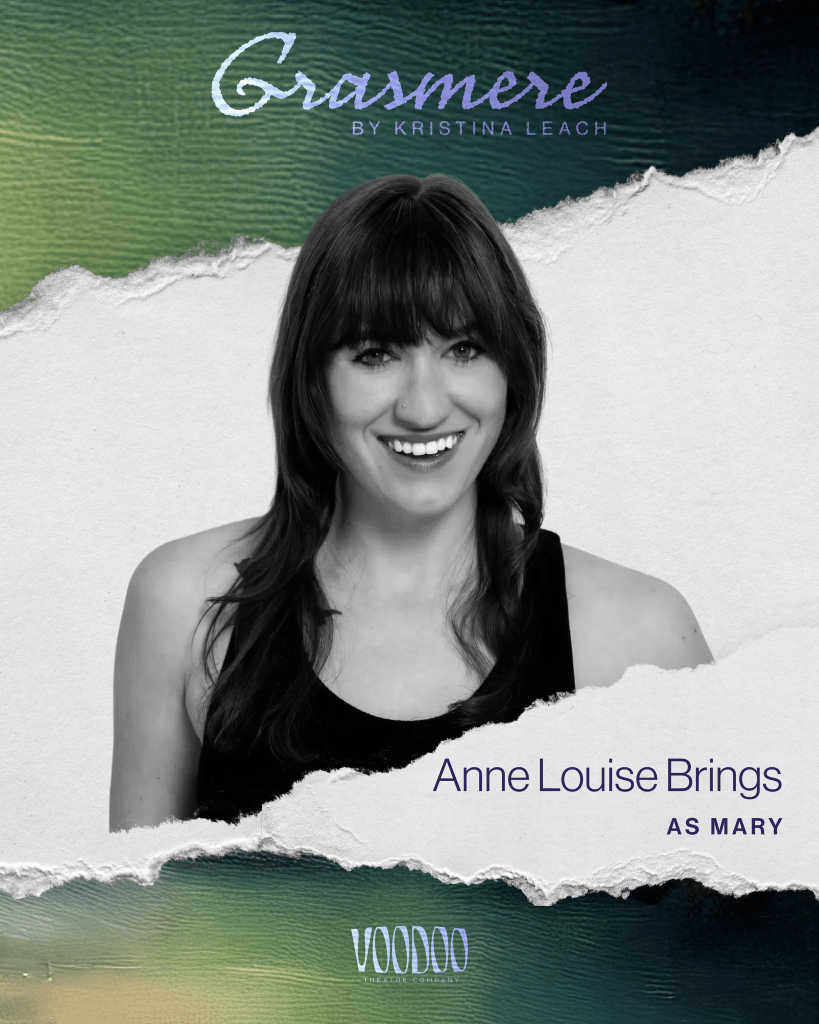
Anne Louise brings offers a Mary Hutchinson of quiet authority and perceptive clarity. Her Mary understands the structure she is entering even as she consents to it. When she tells Dorothy, “I can give him the one thing you cannot,” the line is delivered without triumph or cruelty. It reads as a diagnosis rather than a rivalry. Brings ensures Mary is neither rival nor villain, but another woman positioned to sustain the poet’s life in a different register—through legitimacy, marriage, and futurity.
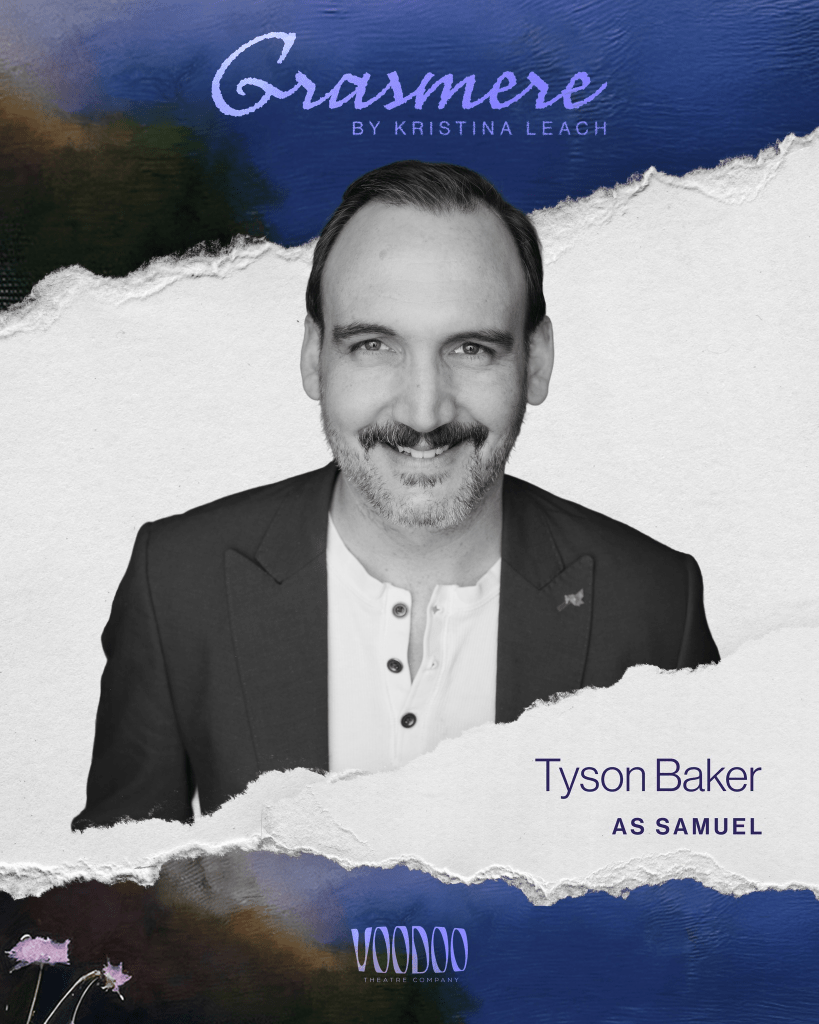
As Samuel Taylor Coleridge, Tyson Baker brings volatility and disclosure in equal measure. Baker’s Samuel is sharp, funny, erratic, and deeply unwell—but he is also the play’s most explicit truth-teller. His accusations—pressing Wordsworth about the women he has “used” for poetry—widen the play’s critique beyond the household. Samuel names what others refuse to see: that Dorothy is not the first woman absorbed into the poet’s work, merely the one closest at hand.
Creative Team Highlights
Director Tracy Callahan shapes Grasmere with remarkable precision. Her staging refuses melodrama, instead relying on listening, proximity, and sustained tension to do the ethical work of the play. The result is a production that feels less like a historical reenactment than a careful, contemporary inquiry into power, care, and authorship. Grace Heinz’s sound design is spare and deliberate, supporting the production’s emotional architecture without guiding or softening it. Austin Wray’s lighting design subtly articulates shifts in authority and intimacy, carving the domestic space into zones of visibility and containment. Alicia Kondrick’s costume design grounds the production in the period seamlessly. The scenic work—designed and constructed by Chris Philion, with scenic artistry by Aisha Garcia and Teauhna Chavez—remains intentionally restrained, allowing atmosphere rather than spectacle to carry meaning. A standout element is a series of hanging studio flats faced with painted muslin and rigged with chain and steel cable, their upper edges finished with subtle crown moulding. They read as windows in a countryside home, with clouds drifting just beyond—architectural gestures toward the pastoral life the characters repeatedly describe as enviable, yet never fully accessible.
Together, the creative team demonstrates a shared commitment to clarity, discipline, and ethical precision. Every design choice reinforces the play’s central question—not how genius is made beautiful, but how it is sustained, and at whose expense.
The Muse as a Structure of Power
While Grasmere is not a fully biographical account, it is firmly anchored in historical fact. Annette Vallon was real, as was the child she bore with William Wordsworth—an illegitimate daughter whose existence the play refuses to let dissolve into abstraction, youthful error, or poetic footnote. Mary Hutchinson was real as well, and her marriage to Wordsworth secured the poet’s social legitimacy and domestic respectability. And while speculation has long surrounded the nature of Wordsworth’s relationship with his sister, Dorothy Wordsworth, what is historically uncontested is their extraordinary closeness: years of shared living, creative interdependence, and documented reliance on Dorothy’s journals as a source for William’s poetry. Leach does not invent these women. She stages them in relation to one another and asks what it means to take their proximity seriously.
At the center of Grasmere is the figure of the muse—and the play insists that this term is not romantic, but operational. Dorothy is repeatedly named as Wordsworth’s muse, praised for her brilliance, and credited—privately—with supplying the observations and language that fuel his work. Yet this recognition never becomes authorship. Instead, it becomes containment. Dorothy is essential, but not equal; foundational, but not free. Her labor circulates as inspiration while her name disappears from the record. Samuel names this dynamic with brutal clarity when he tells her, “He keeps you here so that you can inspire him.” What sounds like devotion is revealed as strategy. When Dorothy finally asks whether she has been kept “only to give [him] words,” the play crosses a crucial threshold: inspiration is exposed as extraction, and the domestic space as a site of ongoing appropriation.
Mary Hutchinson, too, is a muse—though of a different kind. Where Dorothy provides language, attention, and emotional attunement, Mary offers legitimacy, stability, and futurity. She brings marriage, social permission, and the promise of heirs—conditions necessary for a poet’s legacy to endure publicly. When Mary tells Dorothy, “I can give him the one thing you cannot,” the line lands not as rivalry but as diagnosis. Mary does not replace Dorothy’s creative labor; she fulfills a separate demand placed on the poet by history. The poet requires multiple muses to sustain both the making and the preservation of his work. None receives authorship. All absorb cost.
This refusal to frame Dorothy and Mary as adversaries is one of Grasmere’s most incisive moves. The play dismantles the familiar narrative of competition between women and replaces it with a critique of structural allocation. Dorothy is asked to remain, to inspire, to give words. Mary is asked to bind, to reproduce, to authorize. Neither role permits full agency. Neither grants reciprocal recognition. The tragedy is not that one muse supplants another, but that the poet requires more than one muse—and still claims singular genius.
Authorship and Extraction
Samuel Taylor Coleridge functions as the play’s most explicit whistleblower. He presses Wordsworth about the women he loved abroad, asking whether they “helped you write,” whether they were “used” for poetry—whether intimacy, desire, and experience have always been raw material for art. These accusations widen the scope of the play’s critique. The illegitimate child in France is not an anomaly; it is evidence of a pattern. Wordsworth’s genius is revealed as accumulative, built from multiple women’s bodies, emotions, and disposability, with accountability consistently deferred.
This is not merely emotional abuse. Grasmere presents a continuum of harm. Sexual abandonment, reproductive consequence, creative extraction, and emotional containment operate together, sustained by the poet’s certainty that everything he touches is usable. Wordsworth does not forbid Dorothy from leaving; he makes leaving feel impossible. He promises safety, permanence, and love while denying her meaningful choice. Even care becomes coercive. Late in the play, when Wordsworth thanks Dorothy for staying and promises, “I will keep you. I will keep you safe… my love, my protector, my muse,” the language sounds like devotion—until it reveals itself as possession.
Reconsidering Genius
What makes Grasmere so unsettling is that Wordsworth is not monstrous. He is ordinary. Thoughtful. Celebrated. He believes himself good. And that is precisely the danger the play names. Abuse does not require cruelty; it requires entitlement protected by admiration. The poet’s harm is made invisible because it is wrapped in beauty, gratitude, and cultural prestige.
Crucially, Grasmere refuses to treat this pattern as unique to Wordsworth. As Samuel’s accusations widen the lens, the play situates itself within a much longer literary tradition—one that includes William Shakespeare, whose plays repeatedly convert women’s desire, suffering, and death into the machinery of enduring art. From Romeo and Juliet onward, women’s bodies become narratively expendable so that poetic meaning can cohere. What differs in Grasmere is not the structure of harm, but its visibility. Leach pulls the process out of metaphor and into the home, where authorship is revealed as something built not only from imagination, but from real lives that absorb its cost.
In doing so, Grasmere offers a quiet but devastating corrective to how we are taught to admire genius. It does not ask us to disavow poetry or to retroactively moralize history. It asks something far more difficult: to recognize how brilliance has been made legible through exploitation, and how canon formation has trained us to forgive it. Grasmere insists that admiration without accountability is not neutrality—it is complicity.
In the end, Grasmere is not a story about forbidden love or Romantic excess. It is a reckoning with authorship itself. It asks what happens when we stop mistaking intimacy for consent, inspiration for innocence, and genius for virtue. And it leaves us with an uncomfortable but necessary demand: to listen, at last, to the women whose lives, words, and bodies made poetry possible—and to reckon with what that listening requires of us now.
Final Thoughts
In its final moments, Grasmere does not offer resolution so much as stillness. The language continues to circulate, the home remains intact, and the poet’s legacy is secure. What lingers instead is the sound of voices that have spoken together and now recede—words shared, absorbed, and left behind. This production does not demand judgment from its audience; it asks for attention. It asks us to notice how easily care becomes containment, how admiration shields harm, and how often genius is sustained by lives made secondary to it. Grasmere leaves us not with an answer, but with a practice: to listen more carefully, to credit more honestly, and to sit with the knowledge that beauty and harm are not opposites, but frequently entangled. That recognition, the play suggests, is where accountability begins.
Show Information: Grasmere
Presented by: Voodoo Theatre Company
Written by: Kristina Leach
Directed by: Tracy Callahan
Dates: January 30 – February 8, 2026
Venue: Studio 5400, Mid Valley Performing Arts Center
Location: Taylorsville, Utah 84129
General Admission (Adult): $25.00
(Includes $20.00 ticket + $5.00 service fee)
Student (with valid ID): $12.50
(Includes $10.00 ticket + $2.50 service fee)
Performance Details
- Run time: Approximately 90 minutes
- Audience: Recommended for mature audiences (18+)
- Ticket policy: All patrons require a ticket regardless of age; no infants being held
Performance Schedule
- Sunday, February 1, 2026 — 6:00 p.m.
- Friday, February 6, 2026 — 7:30 p.m.
- Saturday, February 7, 2026 — 2:00 p.m.
- Saturday, February 7, 2026 — 7:30 p.m.
- Sunday, February 8, 2026 — 6:00 p.m.
Creative Team
- Director — Tracy Callahan
- Stage Manager — Taylynn Rushton
- Sound Designer — Grace Heinz
- Lighting Designer — Austin Wray
- Costume Designer — Alicia Kondrick
- Assistant Artistic Director — Jack Cobabe
- Artistic Director — Patrick Kibbie
- Scenic Artist — Aisha Garcia
- Scenic Assistant — Teauhna Chavez
- Scenic Design & Construction — Chris Philion


Leave a Reply