

Written by Keolanani Kinghorn and Guest Writer Sam Bryson
Salt Lake City, UT—On Friday, September 25, UtahPresents brought Niladri Kumar to Libby Gardner Concert Hall for Space Between the Notes, a program honoring his late collaborator, the tabla legend Zakir Hussain. Before Kumar stepped onto the stage, he and his tabla accompanist, Satyajit Talwalkar, each touched their head and chest, a small gesture of respect that set the tone for what followed.
They then settled in with sitar, tabla (a pair of hand drums used in Hindustani raga performance), and, instead of the traditional tanpura or even a sruti box, an audio interface and a guitar multi-effects pedal. By the end of the night, Kumar had also brought out a Ferrari-red electric zitar, an instrument of his own design. In between came ninety minutes of music that honored the long tradition of Hindustani raga performance while pulling it firmly into the present.

A tradition updated
Kumar has built a career that crosses freely between the classical stage and the wider world. He played on the Grammy-winning Global Drum Project with Mickey Hart and Zakir Hussain, and on John McLaughlin’s Floating Point, which reached No. 14 on Billboard’s jazz albums chart. In India, his honors include the Sangeet Natak Akademi’s Ustad Bismillah Khan Yuva Puraskar for Hindustani instrumental music and an MTV Immies award for his album If. He has also contributed to Bollywood soundtracks and invented his own instrument along the way.
The modern touches showed up before a note was played. The drone, which is always present in Indian classical music alongside melody and rhythm, came from an electronic device instead of a tambura (or tanpura) player. Kumar also had a pedal board at his feet with looping capabilities, which may explain some of the evening’s more puzzling layers of sound.
The drums had been updated, too. The name “tabla” refers both to the pair and to the smaller, higher-pitched drum. That drum is usually tuned by hammering wooden dowels under its leather straps. The larger drum, the baya, typically has little or no doweling. Its lower tension lets the player bend its pitch during performance. These drums used mechanical tension rods adjusted with a wrench, but Talwalkar still had to finish the job the old way, tapping carefully around the braided rim.
That tuning became part of the show. Utah’s dry air is hard on almost any instrument not accustomed to it, and especially on skin-headed ones. Both musicians kept adjusting through the opening minutes. Kumar would get his instrument in tune, then have to go back and fix it again, and his expression made clear how he felt about it. Each new composition also called for a fresh tuning, because every raga is built on its own set of pillar pitches, and the drums, sitar and all the other instruments have to match. It was a useful reminder of how much preparation goes into music that sounds effortless.
Rabindranath Tagore, the Bengali poet and Nobel laureate whom Kumar would honor later in the evening, captured the feeling more than a century ago in Gitanjali: “The song that I came to sing remains unsung to this day. I have spent my days in stringing and in unstringing my instrument.”
The first composition: patience and fire
The first piece opened with an alap, the slow, freely improvised section in which the performer establishes the rasa, the mood or emotion the raga is meant to evoke. An alap can last five minutes or an hour. Kumar demonstrated his mastery of the sitar and his artistry, wasting no time in setting the tone for the performance. From his first notes, the audience was engaged, if not entranced.
Between the high curving frets were seemingly infinite possibilities as he bent pitches up and down by a fourth or fifth, or as much as a full octave. That range is possible only because of the sitar’s high curving frets, and it is something a guitarist bending a string could never match. His body moved with the pitches as he played. The movement was reminiscent of the expressive hand gestures vocalists make during kriti performances in the classical tradition of South India.
What stood out most was his use of the low strings. Most sitarists use the lower strings (referred to as chikari, or sometimes jhala or drone strings) for rhythmic punctuation, but Kumar articulated beautiful, singing melodies in the low range of the instrument. At times a faint, high overtone seemed to trace its own bending line above them. Whether it came from careful left-hand technique, sympathetic strings or the pedal board was hard to tell from the seats, and it was a delight either way.
The tabla came in earlier than Bryson expected, and the piece moved into its gat sections: fixed, pre-composed melodic frameworks set to a rhythmic cycle. Each new melody was faster and more intense than the last. Each also built to a climax that led the audience to applaud, sometimes a movement too soon.
Kumar steered Talwalkar in and out with small waves of his hand, and Talwalkar would drop back to near silence before rejoining. At one point Talwalkar began matching Kumar’s bass line on the baya, bending its pitch with the heel of his left hand. It was an unusual and exciting moment. Kumar was carrying a bass line and a melody at the same time, which is rare on the sitar.
As the gats sped up, Kumar started squeezing whole runs of notes against the rhythmic cycle. They seemed to float free of the meter, building tension before landing back on the beat. There were moments that sounded strikingly like American blues, like slide or bottleneck guitar played on a sitar, and the melodies took on an urban edge. That feel came through without the music losing its roots.
In the fastest passages, both players’ right hands moved too fast to follow. Kumar jumped between the high melody strings and the low strings so quickly that it looked almost physically impossible. Anyone who has been wowed by a flamenco or fingerstyle guitarist would have had to rethink their standards. Kumar seemed to know it. When he spoke to the audience, he joked that virtually any decent sitar player could play a fast guitar riff with ease.
The second composition: the heart of the evening
The second piece was the emotional center of the concert. It had a melody gorgeous enough to make your heart ache, and it brought in pitches that may have tested some listeners’ ears, especially those unaccustomed to Indian classical tuning. Many of the notes he played fall between the keys of a piano. Indian classical music divides the octave into 22 pitches, whereas Euro-American art music divides it into 12 equal steps (the equal-tempered tuning system). Western listeners often call the pitches in between microtones, and Kumar made full use of them. The alap was shorter this time, and the tabla came in after only six or eight minutes.
The piece was built on a small four-note motif that kept recurring throughout the performance. Other phrases seemed to ask a question, and the motif answered it again and again. Kumar kept inventing new melodies on top of it, and it held the whole piece together. About an hour into the concert, he slipped in a quote of the Beatles’ “Norwegian Wood,” one of the first Western pop songs to feature the sitar, played by George Harrison, who would go on to study with Ravi Shankar. It was so closely related to Kumar’s own material that half the audience was still trying to place it when he had moved on. Then he climbed to the very top of the instrument’s range and played bluesy, playful lines higher than most sitarists ever go, while staying locked in rhythm with the tabla.
The zitar: fusion, rock and roll, and confusion
After a nod to Tagore, Kumar brought out the zitar. It was a fitting pairing. Tagore’s Gitanjali opens with the poet as an instrument himself: “This little flute of a reed thou hast carried over hills and dales, and hast breathed through it melodies eternally new.”
The zitar grew out of a lifetime spent with the sitar. Kumar is the fifth generation of a family of sitar players, and he began lessons at the age of four with his father, Kartick Kumar, a disciple of Ravi Shankar. But he grew up in Mumbai, where the sounds of rock, pop and film music filled the streets outside a household devoted to classical music.
The zitar began as a modified travel sitar. Kumar reduced its strings from around twenty to five and fitted it with a humbucker pickup, the same type used on electric guitars. Despite its rock-guitar sound, Kumar insists it isn’t a hybrid; it is, as he told Serenade Magazine, “more like the sitar but electric.” He spent five years refining its first album. He started with a single track, “Priority,” in 2003 and reshaped the music based on how live audiences reacted, before releasing Zitar in 2008. The instrument has since appeared on Bollywood soundtracks such as Dhoom 2, on “Crazy Kiya Re,” and Life in a… Metro, bringing the sitar’s voice to audiences who might never attend a classical concert.
In person, the bright red body and high curved frets look like a cross between a sports car and a sitar. The zitar piece had a lilting swing to it, and Talwalkar leaned into the groove as Kumar gradually added distortion. He started with just a trace and built to a full fuzz-and-wah growl. It was the evening’s clearest example of what he jokingly called his love of “fusion, rock and roll, and confusion.” It was also the most fun the audience had all night.
The silences
Some of the most memorable moments came when the music nearly stopped. After each climax the tabla continued with quiet fragments and the drone hummed on underneath, and the silence felt just as full as the notes. It fit the evening’s theme: in this music, what happens between the notes matters as much as the notes themselves.
Kumar’s playing is undoubtedly a display of virtuosity, yet the raga’s intensity feels less like a display and more like a meeting place, where music, literature, the modern and the classic collide. Kumar makes the ancient and the modern sound like one conversation.

Show Info
What: Space Between the Notes, a tribute to Zakir Hussain
Who: Niladri Kumar, sitar and zitar, with tabla accompaniment
When: Friday, September 25, 2026, 7:30 p.m.
Where: Libby Gardner Concert Hall, University of Utah
Presented by: UtahPresents, in partnership with the University of Utah School of Music
Sponsored by: Dinesh and Kalpana Patel
Running time: 90 minutes
More info: utahpresents.org
- Kumar playing “Crazy Kiya Re” live on the zitar: youtube.com/watch?v=f1lECSWi_6I.
- His official YouTube channel: youtube.com/channel/UCcIC3DLcTBKFKhbIGIpSPoA
Catch the Tour
Space Between the Notes continues across the U.S. through spring 2027. Upcoming stops include:
- October 1, 2026: Dougherty Valley Performing Arts Center, San Ramon, CA
- October 9, 2026: Indian Classical Music Circle of Austin, Austin, TX
- October 18, 2026: Payne & Mencias Palladium, Carmel, IN
- October 24, 2026: Sixth & I, Washington, D.C.
- November 5, 2026: Adler Hall, New York Society for Ethical Culture, New York, NY
- November 8, 2026: Sanders Theatre, Cambridge, MA
- April 17, 2027: Zellerbach Hall, Berkeley, CA
- For the full schedule and tickets, visit his management’s page at imgartists.com/roster/niladri-kumaar, his official site at niladrikumaar.com, or follow him on Bandsintown for tour alerts.
About Niladri Kumar
Niladri Kumar was born in Kolkata in 1973 and raised in Mumbai. He is a fifth-generation sitarist, and he began studying with his father and guru, Pandit Kartick Kumar, a senior disciple of Ravi Shankar, at the age of four. He gave his first public performance at six, at the Sri Aurobindo Ashram in Pondicherry.
Grounded in Hindustani classical music, Kumar has spent his career expanding what the sitar can do. His best-known innovation is the zitar, an electric sitar with five strings instead of twenty and a humbucker pickup. He introduced it on his 2008 album Zitar, and it has since become a signature sound in Bollywood film music, heard on songs such as “Crazy Kiya Re” from Dhoom 2.
In 2019 he won Filmfare’s R.D. Burman Award for Upcoming Talent in Film Music for his work on Laila Majnu, including the song “Aahista.”He introduced it on his 2008 album Zitar, and it has since become a signature sound in Bollywood film music, heard on songs such as “Crazy Kiya Re” from Dhoom 2. He has composed and performed for film composers including A.R. Rahman, Shankar–Ehsaan–Loy and Pritam. In 2019 he won Filmfare’s R.D. Burman Award for Upcoming Talent in Film Music for his work on Laila Majnu, including the song “Aahista.”
His collaborations span genres and continents. He toured with Zakir Hussain in Masters of Percussion, played on John McLaughlin’s Floating Point and on the Grammy-winning Global Drum Project, and has shared stages with Herbie Hancock and Charles Lloyd. His long partnership with Hussain was the subject of Sumantra Ghosal’s 2017 documentary The Space Between the Notes, which also gives its name to his 2026–27 tour and to a forthcoming live album of their only recorded concert together.
Kumar also teaches. He serves as dean of the Maya Somaiya College of Performing Arts at Somaiya Vidyavihar University in Mumbai.
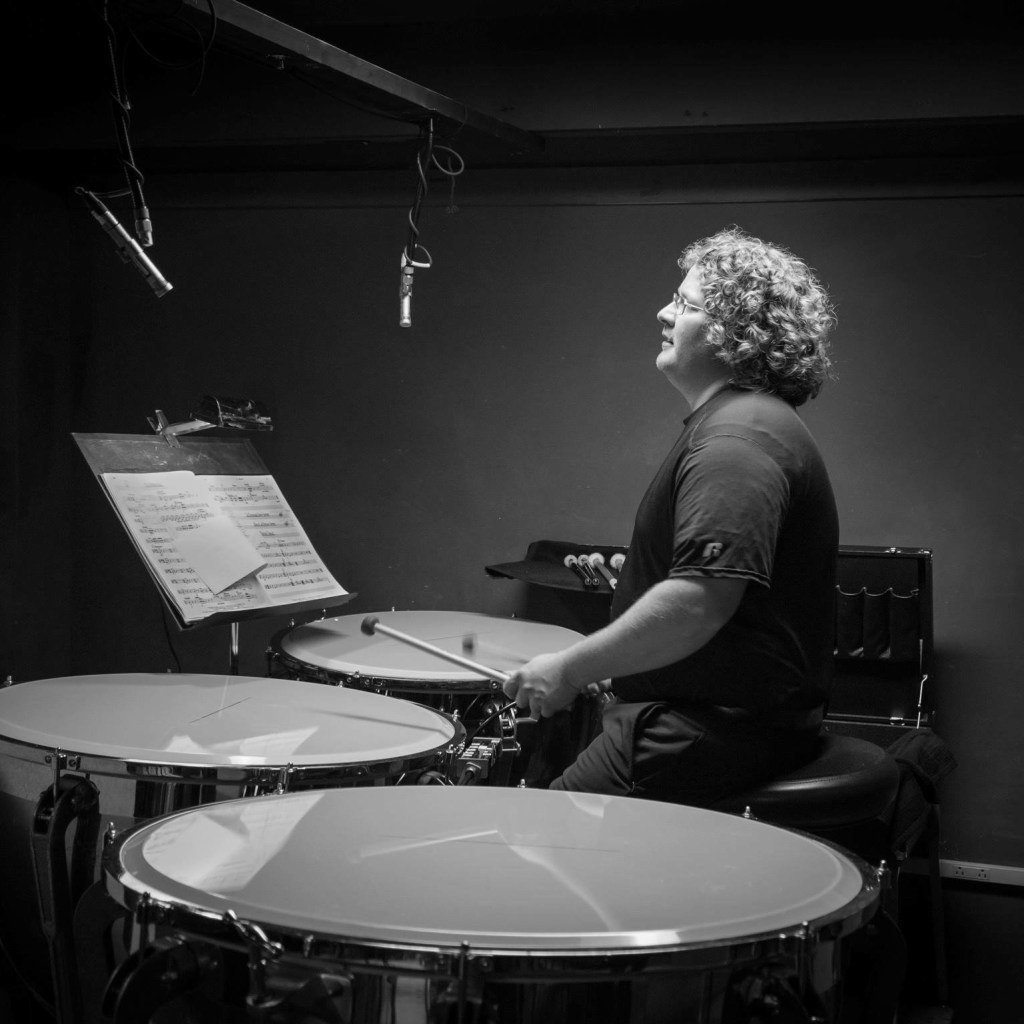
Professor Sam Bryson is the Director of Percussion Studies at Weber State University and a recipient of the 2025 Presidential Teaching Excellence Award. He holds an MFA in Percussion Performance from Northern Arizona University. He has a demonstrated history of leadership in music education, conducting symphonic, marching, and pep bands as well as percussion ensembles. Bryson is known for his impactful teaching, student mentorship, and contributions to nonprofit organizations, instructional design, and music research.


Leave a Reply