We Live Amid and As Archives was a nine-week storytelling and creative archival workshop hosted at the University of Utah. Designed to invite students into reflective and embodied forms of archiving, the project culminated in a powerful installation at the J. Willard Marriott Library that showed for two months this summer, where stories unfolded not as records, but as relationships. Among the artists featured were Jessica Nicole Begay and Alexandria Yaa, whose works offered not only visual and poetic beauty, but embodied declarations of survivance, memory, and care.
We don’t archive to preserve perfection. We archive to honor survival.
—Alexandria Yaa
Their pieces—a memory box and a stitched quilt—transformed the archive from static record into living ceremony. And now, as we reflect on the end of this exhibit, we hold space for their lasting resonance. If Jessica’s work called us home, Alex’s reminds us that grief itself can become an offering—a quilted rebirth made from loss.
Jessica Nicole Begay: “I’m Here”
I’m here because I owe it to my ancestors to believe I am meant to be here.
– Jessica Nicole Begay—
Jessica offered a box of artifacts from home, a painting, a tree, and a poem—but what she really gave was a homecoming. Raised in Crownpoint (on the Navajo Reservation) and Gallup New Mexico, Jessica created a hand-crafted archive rooted in land, lineage, and everyday labor. A wire tree echoed the one behind her grandmother’s house. Woven figures sewn by her grandmother Cecilia rested beside a photo of her mother’s hands shaping cinnamon rolls, even as arthritis ached through her bones.
Inside the box sat her 2023 poem “I’m Here”—a stirring invocation of ancestral survival and personal presence. Written in a single, unbroken sitting, it opens with Diné philosophy:
Shil Hózhó, shit’ Hózhó, shaa Hózhó.
With me, there is beauty; in me, there is beauty; from me, beauty radiates.
The poem unfolds into layered affirmations—of being, of connection, of obligation and rebirth:
I’m here because my ancestors knew their way.
I’m here because of those who came before me to ensure I had a way in this world.
I’m here because I owe it to them to believe I am meant to be here…
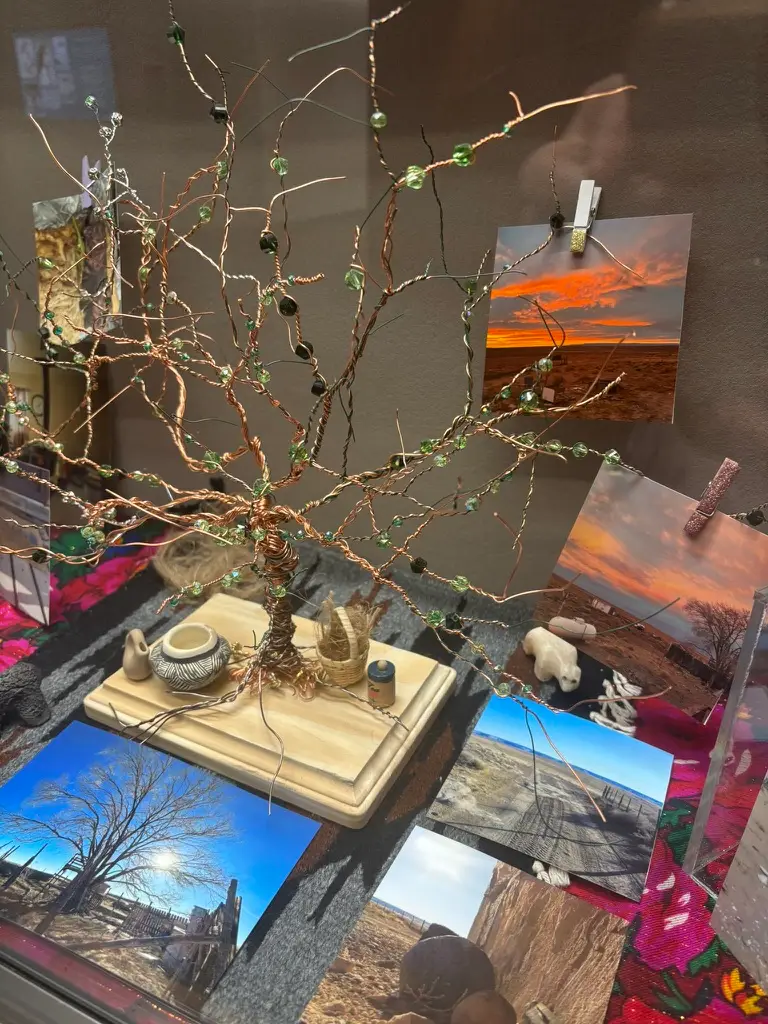
The tree behind her grandmother’s house became a wire sculpture: raw, hand-twisted, adorned with beads. A structure of memory.
—Rhetorical Review—
For Jessica, the archive was never about nostalgia. It was an act of grounding. A way to say, “I carry them with me.” It was also a message to others—especially Indigenous youth: you belong here, too.“
Her presence—rooted in family, in food, in fabric—continues to ripple through memory, reminding us that archives live through those who remember.

Alexandria Yaa: “Sink to Corn”
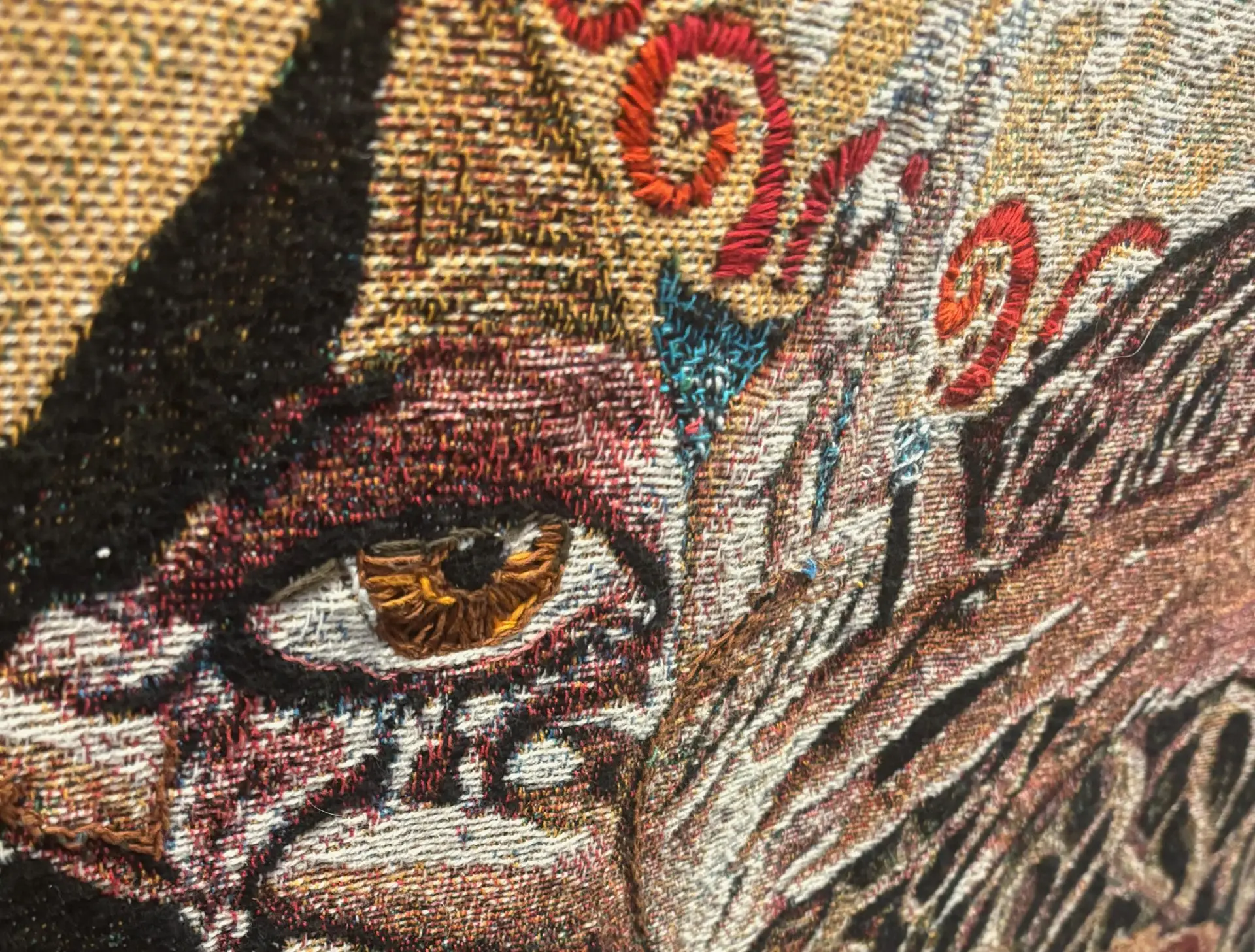
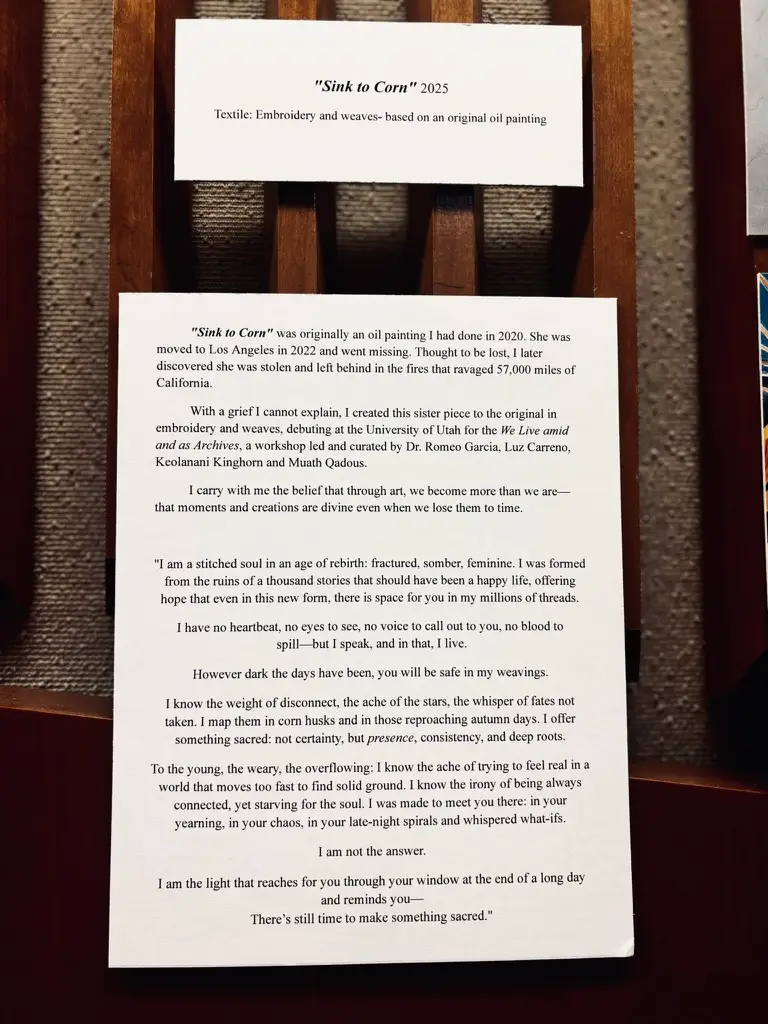
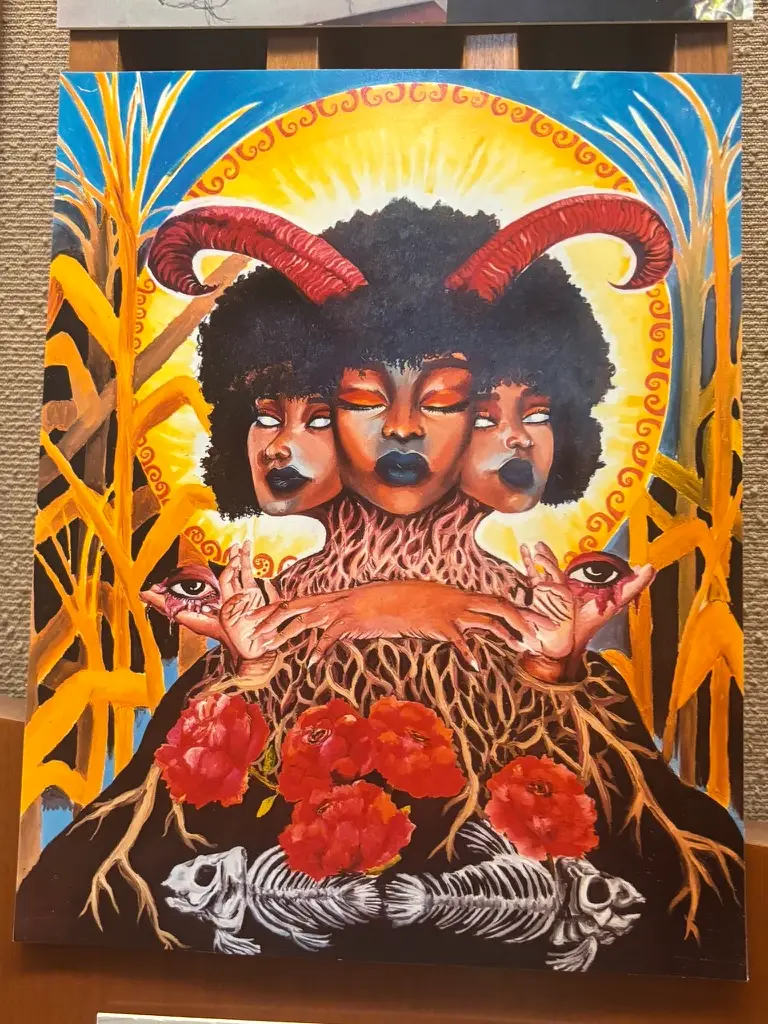
“Sink to Corn” (2025) is a stitched reimagining of a lost oil painting, originally thought destroyed in the 2022 California wildfires and later discovered to have been stolen. This textile version, created through embroidery and weaves, reflects memory, loss, and rebirth.
Originally an oil painting completed in 2020, Sink to Corn was likely lost in the devastating wildfires that swept California in 2022. Thought to be gone forever, the painting was later discovered to have been stolen—left behind in the ashes. From that grief, Alex created a sister piece in embroidery and weaves, which debuted in We Live Amid and As Archives.

“I’m not the same person who painted it. Sometimes that’s a good thing.”
—Alexandria Yaa
Alex’s artist statement reads like sacred testimony:
I carry with me the belief that through art, we become more than we are—
that moments and creations are divine even when we lose them to time.
Alex describes the embroidered piece not as a static object, but as a spirit-being—a fractured, feminine soul formed through grief, memory, and thread.
I have no heartbeat, no eyes to see, no voice to call out to you… but I speak, and in that, I live.
I offer something sacred: not certainty, but presence, consistency, and deep roots.
I was made to meet you there… in your chaos, in your whispered what-ifs.
I am the light that reaches for you… and reminds you—
There’s still time to make something sacred.
The quilt, like Alex, offered comfort without explanation. It made room for longing. It whispered to the weary, the overflowing, the disconnected:
“You are not alone.”
And though the fabric has been folded away, its warmth persists—in the minds and bodies of those who stood in its presence.
The quilt whispered to the weary: “you are not alone.”
A Closing Circle
Now that the exhibition is over, what do we do with what remains?
We remember.
We remember that Jessica’s archive box held more than family heirlooms—it carried a living commitment to ancestral knowledge, embodied through story, care, and continuity.
We remember that Alex’s stitched work mourned a painting lost to fire, yet gave birth to something new—a voice remade in thread, a refuge pieced from grief.
We remember that archives are not only dusty boxes or digital files.
They are cinnamon rolls made with aching hands.
They are oil paintings left behind in ash.
They are corn husks, wire trees, and whispers of hope stitched into autumn cloth.
We remember, and in remembering, we affirm:
They are still here. And so are we.
We carry these archives not in folders or galleries,
but in our bodies, in our breath, in our remembering—
in the way we sit with sorrow and speak of beauty.
We live amid and as archives.
And that living is sacred.
“Speaking Presence into Being”: A Conversation with Jessica
Artist Spotlight: Jessica Nicole Begay (She/Her)
Rooted in Memory, Radiating Voice
Interview by Keolanani Kinghorn | We Live Amid and As Archives (2025)
In this conversation, Jessica Nicole Begay, a Diné poet-artist reflects on art, family, memory, and making meaning through archives, by talking through growing up on the Navajo Reservation, the layered path and how poetry became a way of naming what was always within her. Her archive box is more than a collection—it is a declaration of love, resilience, and the radiant act of saying: I’m here.
————————————————————–
Keola: So, how did you come to art? Was it something you always prioritized?
Jessica: I feel like I’ve always been drawn to art, even as a kid. But I grew up doing sports, academics, a little bit of everything. Art wasn’t something I prioritized. It wasn’t seen as practical. I heard things like, “Art won’t support your family,” or “Art won’t take you anywhere.” So I pushed it aside for a long time.
Keola: So what shifted?
Jessica: It started when I came to Salt Lake City. I didn’t feel like I belonged here at first—it took years to find community. But as I found it, I also found myself. And that’s when art became part of my identity. Through family stories, I began to realize that those stories are a form of art, too. I started making sense of the world—my values, my history—through creating.
Keola: Did you ever receive formal training?
Jessica: Not really. I took art history in high school, and I think that’s where my curiosity really started. But culturally, I was told art wouldn’t “get me anywhere.” It took time to realize that it goes beyond money—it’s about expressing who I am. I was in school and lucky enough to have the space to explore. Museums became sacred spaces where I’d analyze color, texture, movement—everything I’d learned in art history—and start to make my own work.
Keola: What was it like creating your display for We Live Amid and As Archives?
Jessica: That project meant everything to me. I layered the box with textiles, pottery, books, and photos—each representing home. There’s Home Body by Rupi Kaur, which inspired me to think about return and belonging. There are poems, some mine and some borrowed. And many objects belonged to my grandma, Cecilia J. Nez.
Keola: Tell me about her.
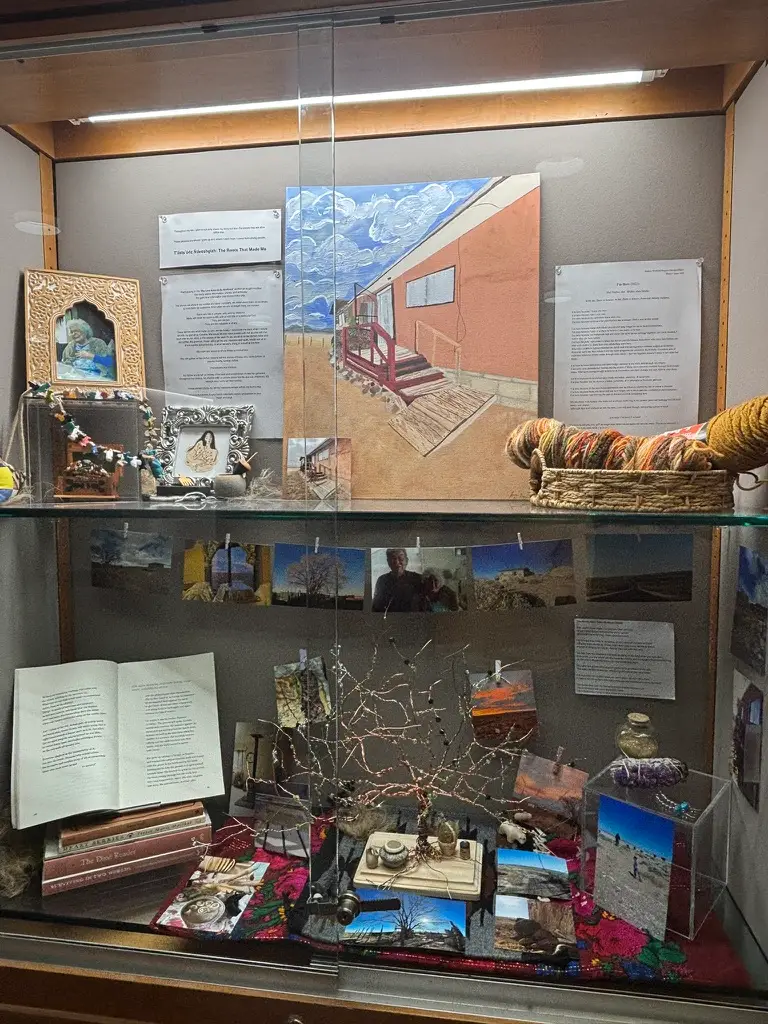
Jessica: She passed in 2016, but her spirit lives on in everything I do. She taught me how to weave, how to make jewelry. She always said, “Keep your hands busy, keep your mind busy—or else your thoughts will take over.” That wisdom stays with me. I displayed her pottery, a rug she owned, even a little fabric chicken she sewed for each of us.
Keola: And the wire tree?
Jessica: That was new for me—my first time wire twisting. I got cuts all over my hands! But it was worth it. That tree represents the big tree on the hill behind my grandparents’ house. You could see it from the road, and it meant you were home. I added beads to make it more “me”—I love accessories. That tree is a piece of her, and of me.
Jessica: That’s what I love about the archive project—it made me ask, “How do we document life for the future, but also for ourselves right now?” Everything in that box is a reminder of where I come from, and where I’m going.
Keola: Was your grandma a teacher?
Jessica: She was. She taught adult education and served on the school board. My grandparents traveled to advocate for students in Crown Point. They were amazing—so wise, and so willing to share. That’s what I hope to carry forward: storytelling, care, community.
Keola: You also had photographs of your mom’s hands making cinnamon rolls…
Jessica: Yes. That one means so much to me. My mom has rheumatoid arthritis, and it’s painful for her to use her hands, but she still makes cinnamon rolls for us. That photo represents love, sacrifice, and how we archive through action. Sharing food is her love language, just like my grandma’s was making things with her hands.
Keola: There was such care and thoughtfulness in your entire display. Every object felt meaningful.
Jessica: That’s what I hoped for. I wanted it to feel like home—for people to feel invited in, to sit with it, reflect, and maybe apply their own stories to it. Even if you don’t have a defined “community,” you have yourself. You have your history.
Keola: Was that around the time you wrote your poem I’m Here?
Jessica: That came later, actually—after I graduated in 2022. I wrote it in 2023, during a hard moment. I was working, feeling really disconnected, like I didn’t belong anywhere. One day, I just sat down and wrote the poem in one go, on a friend’s couch. It poured out of me. I didn’t even lift the pen. That poem reminded me: I’m here. I exist. I belong—not just for me, but for my family and the people who came before me.
Keola: What happened after you first shared that poem?
Jessica: I read it at an open mic. I was so nervous—worried people would judge me. But people came up afterward and thanked me. It meant something to them. And that was when I knew: this is what I want to do. Share words. Share art. Remind others they’re not alone.
Keola: What is it about poetry that draws you in?
Jessica: It lets me express what I can’t say any other way. Sometimes the feelings are too complex—too heavy—for everyday language. Poetry holds those indescribable moments. I love when I read a piece and I don’t know exactly what I’m feeling, but I’m feeling something deeply. That’s the kind of art I want to create.
Keola: What other forms of art are you drawn to?
Jessica: All of it—poetry, painting, performance, even modeling. I love being in spaces where different forms of expression come together. When I understand poetry, I can talk with poets. When I understand visual art, I can talk to painters. I want to be part of every community I can.

Keola: You talked earlier about growing up on the reservation. How has that shaped your art?
Jessica: It shaped everything. We didn’t have electricity or running water for years. We hauled water, started fires for heat, cared for sheep and animals. It was hard, but it’s part of who I am. My grandma’s land—the garden, the tree, the sheep corral—it’s all sacred to me. It’s home.
Keola: Do you feel like people understand that experience?
Jessica: Not always. Sometimes I wonder how to share those parts of my story with people who’ve never experienced that kind of life. But I’m learning not to be afraid of not making sense. I just try to speak from truth. And maybe those who relate will feel seen.
Keola: Where do you see yourself five or ten years from now?
Jessica: I want to be part of many communities. I love connecting through poetry, art, conversation. Right now, my work mostly lives within Utah, but I’d love to travel—share my work, speak, and connect with people beyond here. I want to empower other Indigenous artists and maybe be someone I needed when I was younger.
Keola: Where do you find your sense of hope?
Jessica: In my family. In remembering where I come from. In my students and their stories. In returning home and sitting on the land. Even in solitude—being alone can be healing. I think we all need to find that grounding in ourselves.
Keola: You said earlier that creating helps you counter the darkness. Can you say more about that?
Jessica: Yes. Life gets heavy. There are moments when I feel like I’m losing myself. But creating—painting, writing, performing—brings me back. Even when the art isn’t perfect, at least I’m making something. At least I’m here. That act of creating reminds me I still have power, still have presence. That’s why I do it.
Keola: Speaking of that, what advice would you give to someone trying to find their identity or community?
Jessica: Take your time. There’s no rush. And don’t be afraid of solitude—sometimes you need to be your own company first. It’s in those quiet moments that you begin to hear your own voice.
Keola: That’s beautiful. What’s next for you?
Jessica: I’ll be performing at the Utah Arts Festival on Saturday, June 21st at 11:15 a.m. I’m also working on a website to share my poetry and art more widely. It’s a slow process, but I want to make it accessible for people to connect with my work.
Catch Jessica Nicole Begay Live
📍 Utah Arts Festival
🗓️ Saturday, June 21, 2025
🕐 1:15 – 1:30 PM
About The Artist: Jessica Nicole Begay
Jessica Nicole Begay (she/her) is a Diné (Navajo) Indigenous writer and master’s student in Writing & Rhetoric Studies at the University of Utah. Originally from Crown Point, on the Navajo Reservation in rural New Mexico, Jessica brings a unique cultural perspective shaped by her upbringing just an hour from Gallup. Growing up in an area where Indigenous representation was limited, she felt both deeply connected to her homeland and marginalized within educational spaces.
Inspired by her childhood love of journals, books, and storytelling, Jessica began her higher education in kinesiology before discovering her true passion in the humanities. She earned a bachelor’s degree in Writing & Rhetoric and has since embarked on an MA in the same field. Jessica’s academic journey is deeply influenced by Native writers and scholars, whose work ignited her own creative pursuits.
As a graduate teaching assistant and student facilitator, Jessica cultivates writing spaces for others—especially Native American students—helping them see storytelling as a tool for self-expression and cultural preservation. Her commitment to community and representation shines through her leadership in the “We Live Amid and As Archives” workshop series at the Marriott Library.
Jessica envisions a future where more Indigenous students recognize the humanities as a viable and valuable path. After completing her MA, she plans to move back to New Mexico to support her community, encourage more Native voices in writing, and remind fellow Indigenous creators that their stories matter.(Read more Humans of the U: Jessica Begay). You can follow her reflections and creative journey on Instagram @jessixanixhole and TikTok @jessixanixhole_.
I’m Here (2023) © Jessica Nicole Begay
📲 Jessica Nicole Begay
Instagram: @jessixanixhole
TikTok: @jessixanixhole_
“Stitching Back What Was Lost”: A Conversation with Alex
Artist Spotlight: Alexandria Yaa
Stitching Memory, Unraveling Silence
Interview by Keolanani Kinghorn | We Live Amid and As Archives (2025)
In this conversation, Alex reflects on the early days of art, the weight of language and family expectations, and how stitching became a way of reclaiming a story nearly lost.
Keola: Let’s start at the beginning. What’s your earliest memory of making something that made you feel like an artist or a writer?
Alex: One of my first memories is sitting in church—what I called “mass”—with a big notebook, drawing during sermons. I’d sketch for my brothers or whoever was sitting around me. Later, in preschool, my teacher gave me colored pencils and crayons, and I was obsessed. I’d rather be drawing and playing with colors than doing anything else.
Keola: Would you call yourself an artist or a writer—or both?
Alex: I think I’m both, but “artist” feels more right. Writing is part of it, but I experience the world visually. I sometimes joke about putting “artist” in my Instagram bio—it felt silly at first—but I’ve grown into it. “Creative” might be more accurate, but people always ask, “What does that mean?”
Keola: What role did art play in your childhood?
Alex: It was how I processed everything. I grew up in a multilingual household—my dad speaks French and Twi, my mom speaks Twi and English—so I translated a lot. Not just language, but meaning. There was always this pressure to achieve—especially as the oldest. The plan was med school. Art was supposed to be a hobby. But it was my quiet space.
Keola: Did that pressure ever shift?
Alex: Yeah, about five years ago. I was supposed to be a doctor, but I realized I didn’t want that life. I went to Cornell, and it was supposed to be my “I made it” moment. But in the pre-med program, the ethics course was a breaking point. We were discussing Henrietta Lacks, and students—and even professors—dismissed it as irrelevant. It was like: “This is what you’re teaching future doctors?” I couldn’t do it. So I left.
Keola: And that led to the painting you recreated for the workshop?
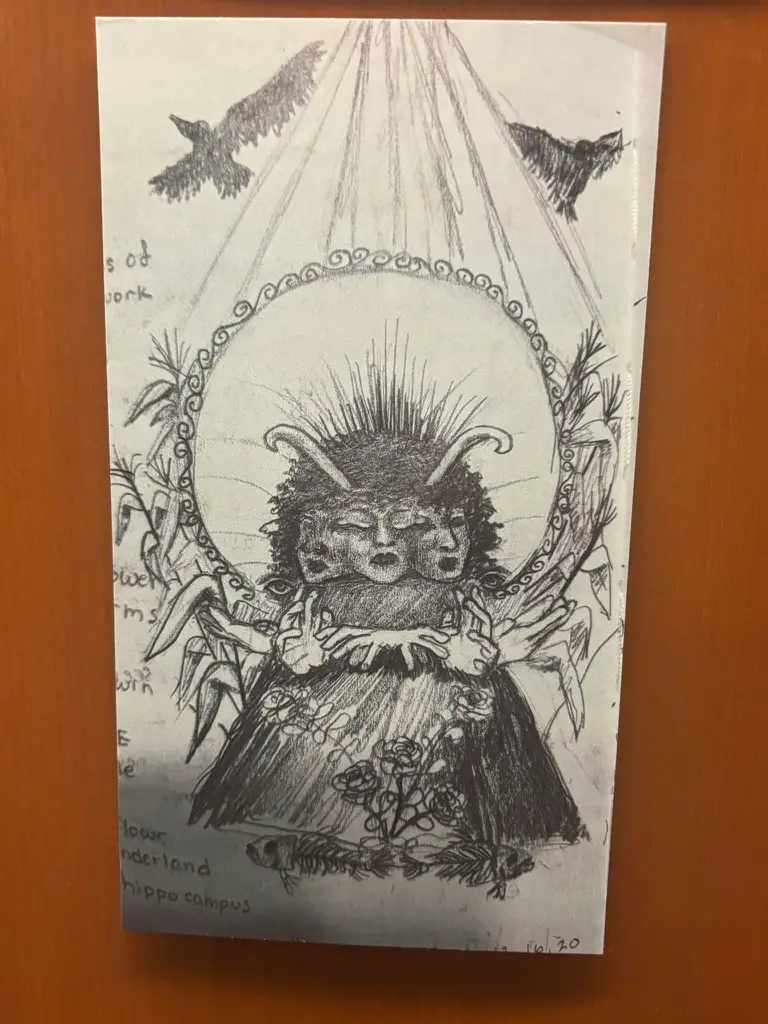
Alex: Yeah. I came home right as COVID hit and started journaling—and drawing. That’s how Sink to Corn began. I don’t even know why I was obsessed with corn. Maybe it was subconscious—like “Cornell.” But I poured everything into that painting. Fish, for my dad’s ocean roots. Roses, for my mom. Kente designs from Ghana. It became this symbolic self-portrait.
Keola: And then it was lost?
Alex: Yeah. I left it in L.A. with a partner. That relationship turned unsafe. When I finally left, I couldn’t take the painting. It was the biggest, most personal piece I’d ever made. I still regret not rolling it up. But I recreated it—for this project. I stitched a new version by hand.
Alex: Yes. The original was oil on canvas. I had it with me when I was between places, and my partner at the time pushed me to bring it to Los Angeles. It ended up going missing. I later found out it had been left behind in the wildfires.
Keola: That’s devastating.
Alex: Yeah. I didn’t know how to grieve it. I had poured so much of myself into that piece. So I started recreating it—not with paint, but with embroidery. It was a way to reclaim it, to reclaim myself.
Keola: You stitched your story back together.
Alex: I did. And not just mine—my community’s, too. I stitched while teaching, while talking with coworkers, during staff meetings. So now that piece holds all of that. It reminds me that I’m not alone. That I’m worth taking care of.
Keola: Was the embroidery part of your healing?
Alex: It’s still ongoing. But yeah—recreating it was a way to reclaim what I’d lost. And this time, I stitched more than just me into it. I stitched in my students, my coworkers, my community. It reminds me: I’m worth protecting. Not just my art. Me.
Keola: Do you have a creative routine now?
Alex: I’m trying to get back to daily sketching—no pressure to be perfect, just showing up. As a teen, I’d do one drawing every day. I’m also colorblind—deutan—and didn’t know until my senior year of high school. Some of my drawings back then have wild color choices because I literally couldn’t see them right.
Keola: Has that changed how you think about art?
Alex: Definitely. I think of art as process, not perfection. There’s no destination. I rarely plan things. The work tells me what it wants to be. Even this embroidered version of Sink to Corn evolved as I worked. I added stars. Texture. New meaning. I’m not the same person I was when I first painted it. Sometimes that’s a good thing.
Keola: Do you think it’s important to archive your art?
Alex: Yes. Because stories vanish. Especially in families like mine where records are lost or never kept. I think everyone has something to offer—even if they don’t realize it. Archiving isn’t just about memory. It’s about honoring life. And survival.
Keola: That’s the power of art as archive. You’re not just recording; you’re honoring the people and moments that shaped the work.
Alex: Exactly. The embroidery isn’t just a replacement—it became something new. A living archive. It’s still unfinished, and that feels right. I’m not done either.


“I want to paint a mural in a beautiful space—a sky full of clouds.”
—Alexandria Yaa
Keola: What’s your dream project?
Alex: I want to paint a mural—something big and beautiful, full of clouds. I even know the building I want to put it on. I’d need help to figure out the gridding, the right paints, all the logistics. But yeah, that’s the dream. Something public. Something permanent.
Keola: It’s a powerful idea. What would the clouds symbolize for you?
Alex: Hope, change, softness, expansiveness. I think we need that—especially in a world that feels so rigid and fast-paced. I want to offer a moment of stillness.
Keola: Do you have advice for other artists—or for students—struggling to find their voice?
Alex: Let your art be messy. Let it be for you first. There’s no right way to be creative. I’ve taught students who swear they aren’t creative—until they find the right outlet. Art is process. It’s resistance. It’s how we survive when words fail.
“My students say, ‘I’m not creative,’ but they just haven’t found their way in yet.”
—Alexandria Yaa
Keola: That attention to detail is so visible in your work now. Do you think your upbringing shaped that?
Alex: For sure. My parents are both from Ghana—my dad speaks French, Twi, and English; my mom speaks Twi and English, but her accent is heavier. They speak different dialects of Twi, so growing up, I sometimes had to translate between them. And for my siblings too. It was a lot to carry.
Keola: That’s a huge responsibility.

Keola: You’re a teacher now, right? How does art show up in your classroom?
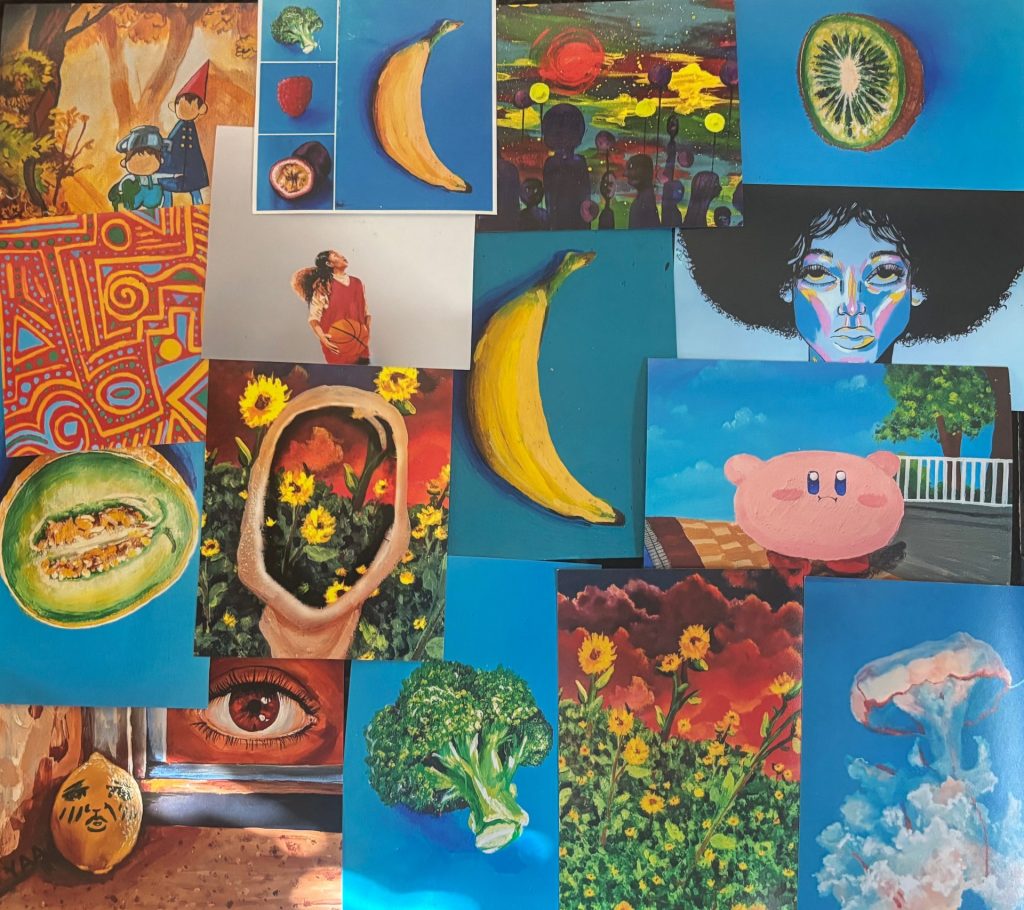
Alex: Yeah, I teach at Roots Charter High School. I try to give students as many tools as possible to express themselves—whether that’s through drawing, storytelling, or even just observation. For a lot of them, creative expression feels unfamiliar or inaccessible at first.
Keola: That resistance makes sense. What kinds of things do you see?
Alex: Some students say things like, “I’m not a creative person,” or “I’m not artistic.” Others say, “I’ll never need this—I’m going into construction.” And I get it. But I always tell them, “Maybe one day you’ll want to express something to someone you care about. You don’t have to be ‘an artist’ to make meaning.”
Keola: That’s such an important shift—to move away from perfectionism and toward expression.
Alex: Exactly. I had one student give me a ton of pushback. Then, two weeks later, he turned in this incredible drawing of an anime character. He realized, “Oh, I can use this.” It became a form of communication for him. And that’s the whole point.
Keola: Do you think students today are struggling with creativity more than before?
Alex: Absolutely. A lot of them are overwhelmed. There’s pressure from AI, from perfectionism, from this idea that creativity has to be instantly good or useful. Some of my students genuinely believe they have no imagination. That breaks my heart.
Keola: So how do you help them get unstuck?
Alex: I try to work backward. I ask: what do you care about? What’s something that’s made you feel something lately? Then we build from there. Sometimes that means storytelling, sometimes sketching, sometimes just sitting with a question. But when they start to trust that their experiences matter—that their stories matter—they open up.
Keola: That’s such powerful work. You’re helping them build their own creative language.
Alex: That’s the hope. I don’t care if they remember every assignment—I just want them to leave knowing they have something to say, and ways to say it.
Keola: Do you think it’s important to archive our lives—through art, writing, storytelling?
Alex: Teaching. I work at Roots Charter High School. A lot of my students don’t think of themselves as creative. They say, “I’m not artistic,” or “This won’t help me.” But then they surprise themselves. One student gave me so much pushback, and then two weeks later turned in this beautiful drawing of an anime character. That’s what keeps me going—helping them see that they already have stories worth telling.
Keola: That resonates so deeply. We lose so much when we lose unrecorded lives.
Alex: I think a lot about the Library of Alexandria. All that knowledge—gone. What would the world look like now if we hadn’t lost it? What if every person’s experience had been valued and preserved?
Keola: That’s why your work as an artist and a teacher matters. You’re helping others understand that their stories have value—that they deserve to be remembered.
Alex: Thank you. That’s the goal. Whether it’s through visual art, poetry, or a single sketch in the margins—it matters. These small things hold memory. And memory holds power.
Keola: Do you consider your art political?
Alex: I think it’s personal-and that in itself is political. Claiming your story. Naming yourself. That’s resistance. My work helps me decide your fate regardless of how it’s written. It’s not just about me. It’s about my mom, my grandmother, those I claim by blood and those from deeper bonds. It’s about saying: we’re still here.
About the Artist: Alexandria Yaa
Alexandria is a visual storyteller and educator whose work explores memory, family, and healing through texture, language, and archival forms. As the eldest child in a multilingual immigrant household, Alex learned early how to navigate the world as a translator—of language, of emotion, of experience. Alex’s mixed-media art, often made during communal moments, becomes a living archive stitched with witness and care. Based in Salt Lake City, Alex teaches at Roots Charter High School, where they encourage students to reclaim creativity as a tool for expression, resistance, and survival.
Under the name Sovrenne, Alexandria also works as a fashion model—a curated archive of movement and self-fashioning. Celebrating five years in the field, their modeling practice blends poise with story, honoring their Ghanaian heritage 🇬🇭 and embodying grace, identity, and transformation with every step. Alex’s mixed-media art, often made during communal moments, becomes a living archive stitched with witness and care. Based in Salt Lake City, Alex teaches at Roots Charter High School, where they encourage students to reclaim creativity as a tool for expression, resistance, and survival.

📲 Alexandria Yaa
Instagram: https://www.instagram.com/sovrenne/
Sink to Corn (2025) © Alexandria Yaa
“Art is not just what we make—it’s what we carry.”
—Rhetorical Review—
In Gratitude…
To Jessica Nicole Begay and Alexandria Yaa: thank you. For your stories, your vulnerability, your art, your courage. Your work turned the archive into something that breathes. Into something that loves. Into something that listens back. Your presence in We Live Amid and As Archives was not an exhibition. It was a gift.
This workshop series was made possible with support from @marriottlibrary, @uofuwrtg, @uofucpik, and the Salt Lake Community Writing Center.


Leave a Reply