

Reviews like this take 10+ hours to research and write. If this one was useful, even $1 helps. Support Rhetorical Review.
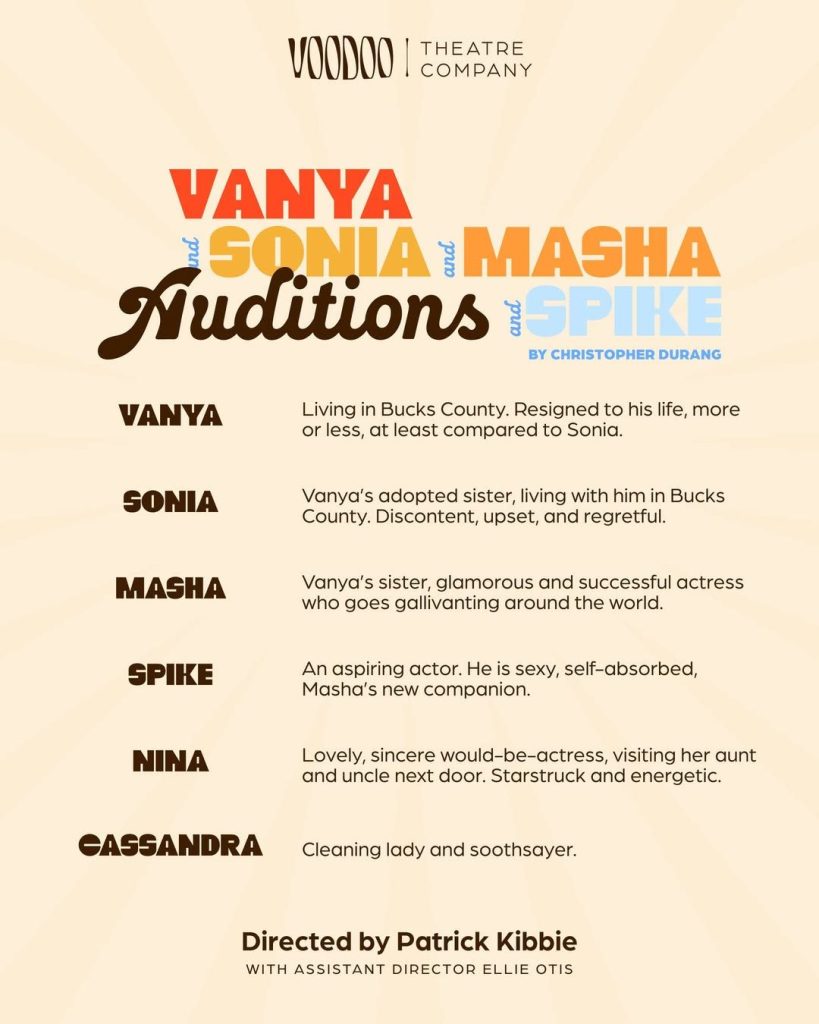
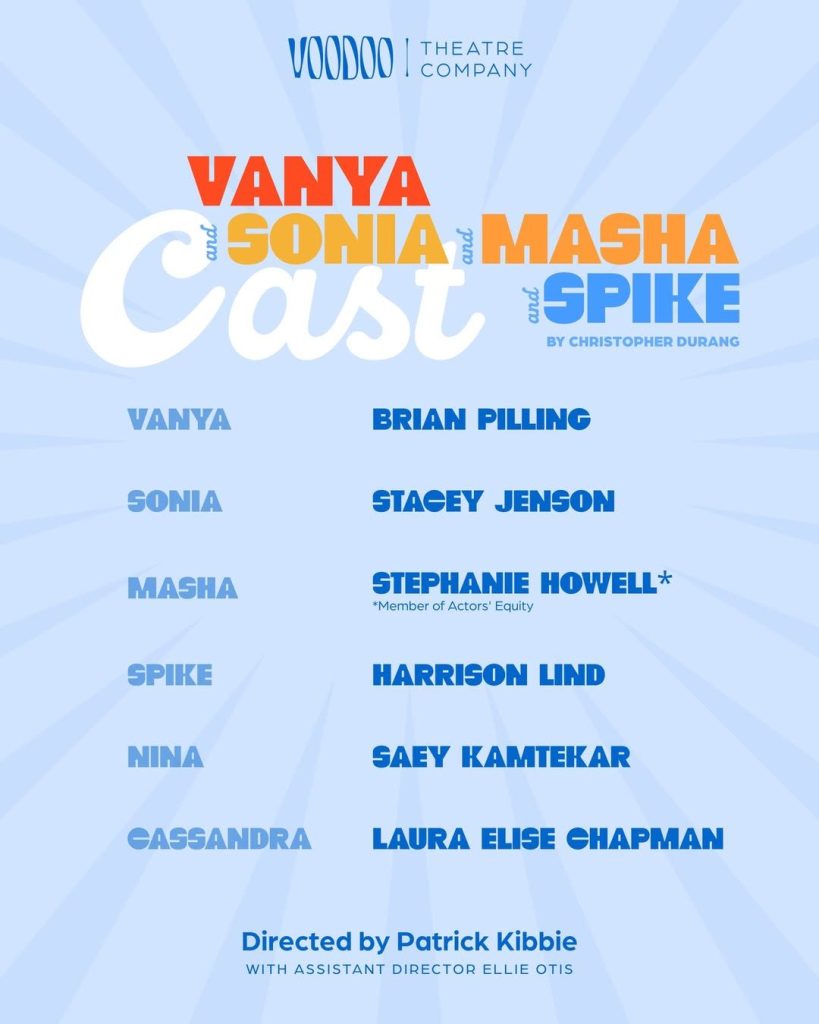
Salt Lake City, UT—Vanya and Sonia and Masha and Spike (VSMS) is an adaptation of Anton Chekhov’s Uncle Vanya, set in modern-day Pennsylvania by playwright Christopher Durang. Playing at the Alliance Theater, VSMS excels at blending humor with poignant reflections on familial tensions, missed opportunities, and the passage of time. Directed by Patrick Kibbie and Assistant Directed by Ellie Otis, the production pays homage to Anton Chekhov’s world of emotional complexity and subtle despair, while infusing Durang’s signature absurdist humor.
VSMS is a comedy that premiered at the McCarter Theatre in Princeton, New Jersey, on September 7, 2012. The play centers on three middle-aged siblings: Vanya and Sonia, who live together in their family home, and Masha, a financially successful movie star who supports them. Exploring themes of generational conflict, identity, and the passage of time, the story takes a comedic yet poignant look at the challenges of aging and the search for meaning.

Masha, recently divorced, arrives at the family home with plans to sell it, sparking tension among her siblings. The arrival of Nina, an eager young actress, adds drama, as her charm incites envy and lust. Spike, Masha’s much younger boyfriend, complicates matters further with his flirtatious antics. Amid these developments, Vanya reflects nostalgically on the lost art of communication and simpler times, culminating in a heartfelt monologue lamenting modern life’s distractions. The play concludes on a hopeful note, with the siblings finding solace in each other as they listen to The Beatles’ “Here Comes the Sun.”
Durang’s work is not a direct parody of Anton Chekhov but reimagines his characters and themes in a contemporary setting. The cast includes archetypal characters, such as Cassandra, a cleaning woman with prophetic abilities, and Nina, a bright young starlet reminiscent of The Seagull. Masha’s self-absorption, Spike’s exhibitionism, and Sonia’s comedic despair create a rich tapestry of absurdity and heartache.
The show later transferred to Broadway in 2013, featuring a celebrated cast, including Sigourney Weaver as Masha, David Hyde Pierce as Vanya, and Kristine Nielsen as Sonia. The production earned widespread acclaim, winning the Tony Award for Best Play, the Drama Desk Award for Outstanding Play, and the New York Drama Critics’ Circle Award for Best Play. Nielsen’s performance was especially praised for her ability to balance manic humor with tender vulnerability.
Following its Broadway success, the play had numerous productions across the United States and internationally, including a UK premiere in 2019 and an Off-West End run in London in 2021. A special benefit reading with the original cast was held at Lincoln Center in 2024.
Durang’s Vanya and Sonia and Masha and Spike is lauded for its witty dialogue, strong performances, and insightful exploration of family dynamics and identity. Combining Chekhovian nostalgia with Durang’s signature absurdity, it is both an uproarious comedy and a reflective examination of human folly in the 21st century. In an interview for McCarter Theatre Center in Princeton, N.J., where the play premiered, Durang insisted the play was not a parody. He explained, “It takes Chekhov’s themes and characters and mixes them all up, as if I’ve put them into a comic blender… They are not in pre-revolutionary Russia, and they don’t have samovars, and they don’t pay for things with rubles. On the other hand, they are filled with regret and bitterness and are busy wondering if they made the right choices in life.” The New York Times praised Durang’s play as “deliciously funny…comic acting raised to the level of high art,” when it debuted on Broadway.
VSMS masterfully balances introspection with sharp comedic wit, creating a theatrical experience that is both thought-provoking and entertaining. Drawing on the legacy of Chekhov and Aeschylus, Durang’s characters inhabit a world of everyday struggles that, while seemingly trivial compared to the tragic grandeur of their literary predecessors, resonate deeply with contemporary audiences. This contrast between grand tragedy and mundane discontent highlights Durang’s gift for ironic perspective, using humor to underscore the absurdity of human suffering without diminishing its authenticity.
The play delicately explores the themes of hope and disappointment, particularly through Vanya and Sonia’s emotional journey. It opens with Vanya’s bleak assertion that “hope is the result of being delusional,” but by the end, the tone shifts toward a tentative belief in hope. This shift is reflected in their conviction that there is “always hope,” despite the blue heron—Sonia’s symbol of good luck—once again failing to appear. This interplay between hope and unmet expectations encapsulates the play’s bittersweet charm, mirroring the inherent contradictions of life.
A standout theme in VSMS is the transformative power of performance, which Durang uses to brilliant effect. Sonia’s adoption of a costume and an accent unleashes a previously dormant charisma, offering her a glimpse of untapped potential in her personal life. Similarly, Cassandra’s theatrical incantations and Vanya’s ecological play serve not only as comic devices but as revelations of deeper truths, exposing hidden dynamics and spurring pivotal character development. These moments remind us of the stage’s power to re-imagine identity and reshape reality, both for the characters and the audience.
While the humor occasionally borders on the absurd, it is grounded by Durang’s sharp observations about family, identity, and the human condition. VSMS invites us to laugh at life’s trivialities while urging us to reflect on our own hopes and disappointments. It is a play that, like its characters, finds strength in the interplay of light and shadow, ultimately leaving its audience with an ironic yet heartfelt sense of possibility.
The Performances
The cast delivers standout performances, fully embracing Durang’s blend of satire and sincerity. The titular trio of siblings—Vanya, Sonia, and Masha—anchor the production with nuanced portrayals of characters grappling with middle-aged regret and sibling rivalries.
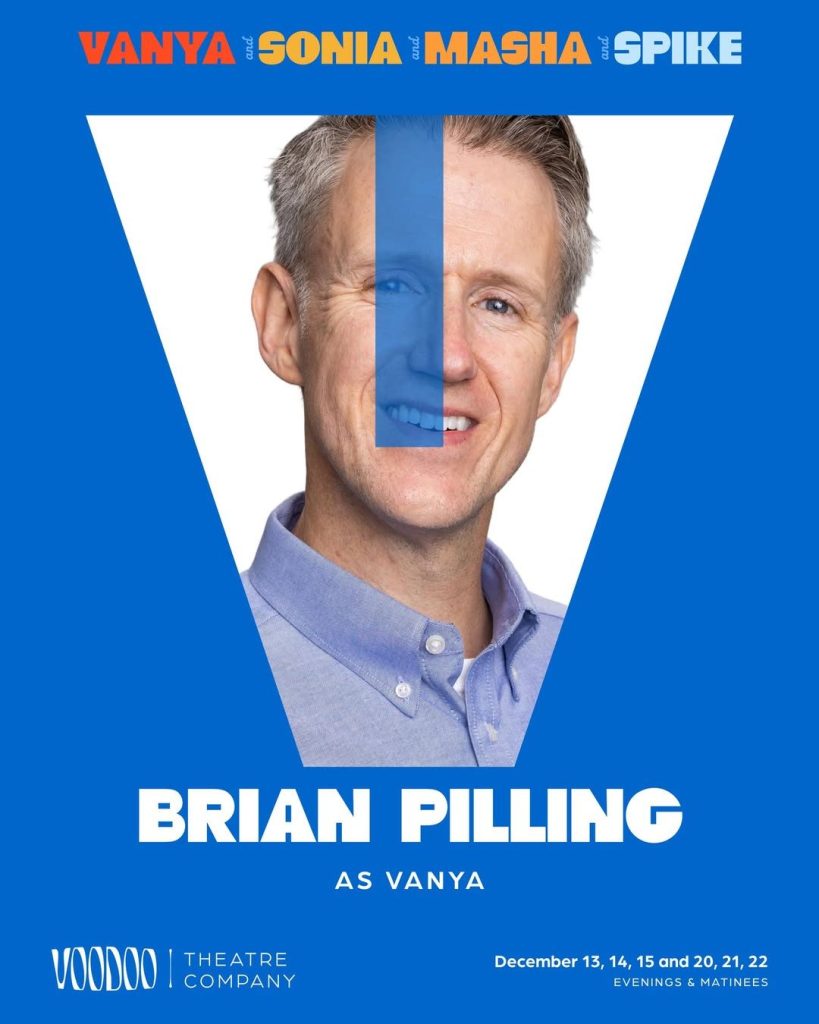
Brian Pilling, as Vanya, captures the resigned calm of a man who “marches to a different drummer,” using subtle comedic timing to make his eventual outburst feel both earned and cathartic.
Stacey Jenson* brings depth to Sonia, transforming her melancholic declarations into moments of humor and heartbreak. Her Maggie Smith-inspired costume-party reinvention stands out as a highlight of the night, evoking abundant laughter from the audience.

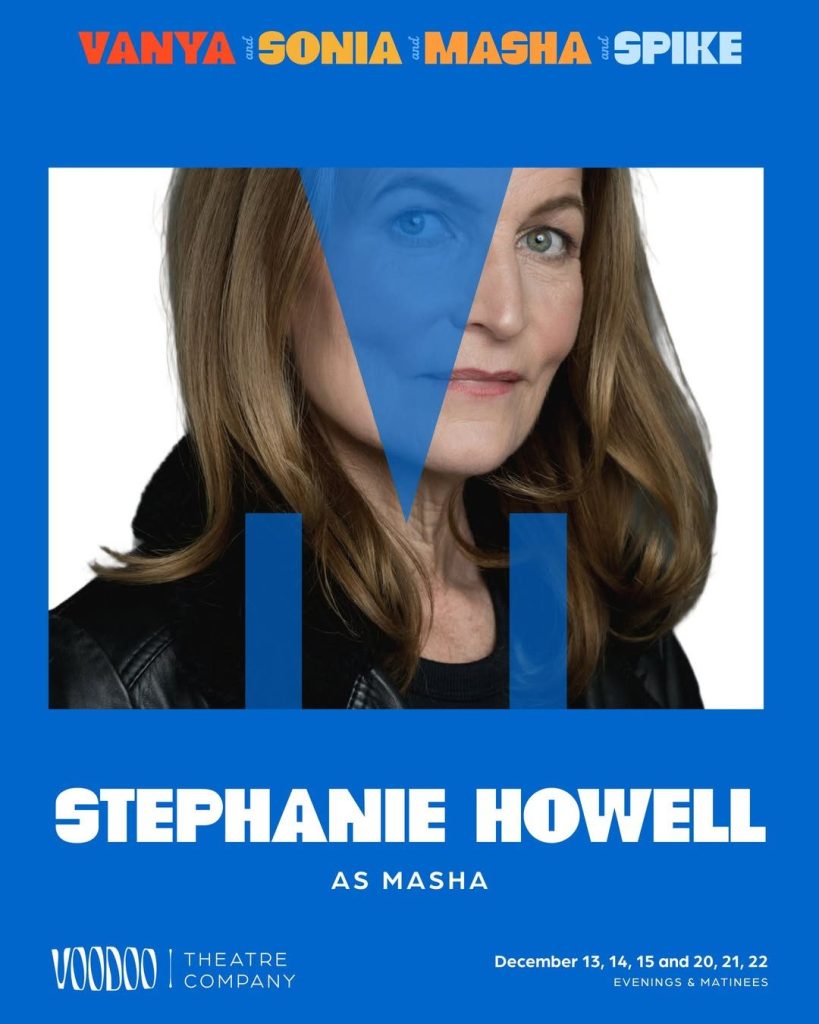
Stephanie Howell* as Masha perfectly embodies the vanity and insecurity of an aging movie star, balancing her character’s selfishness with enough vulnerability to keep her relatable.
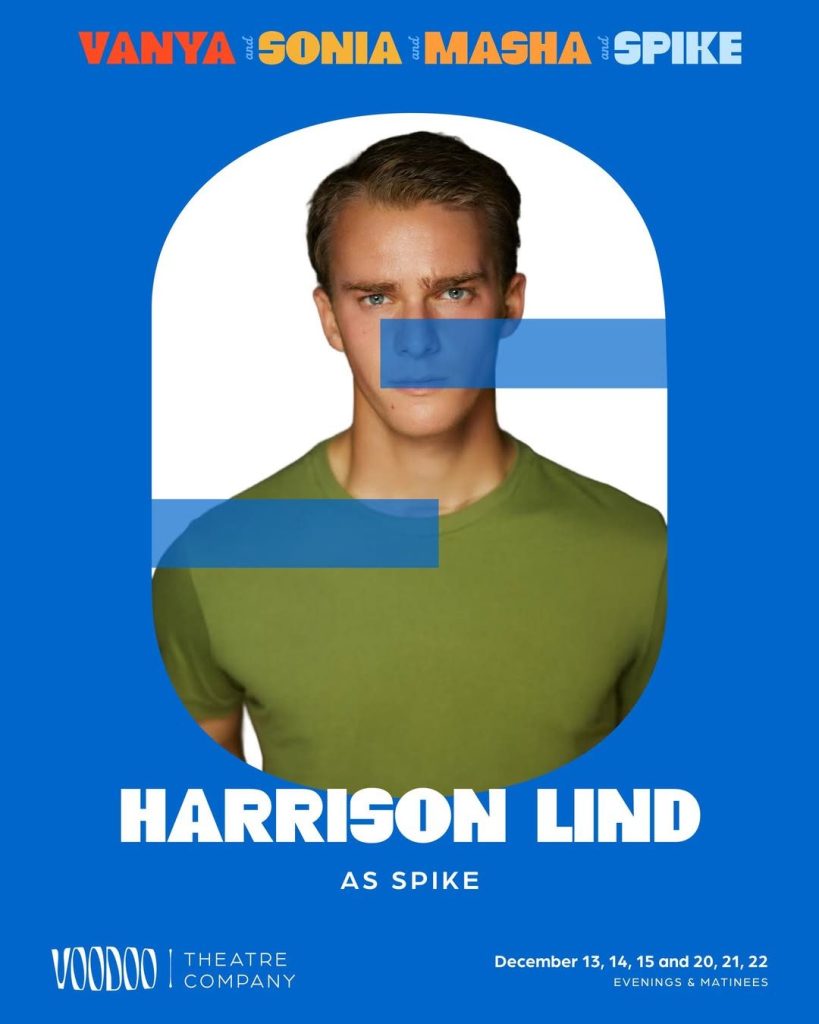
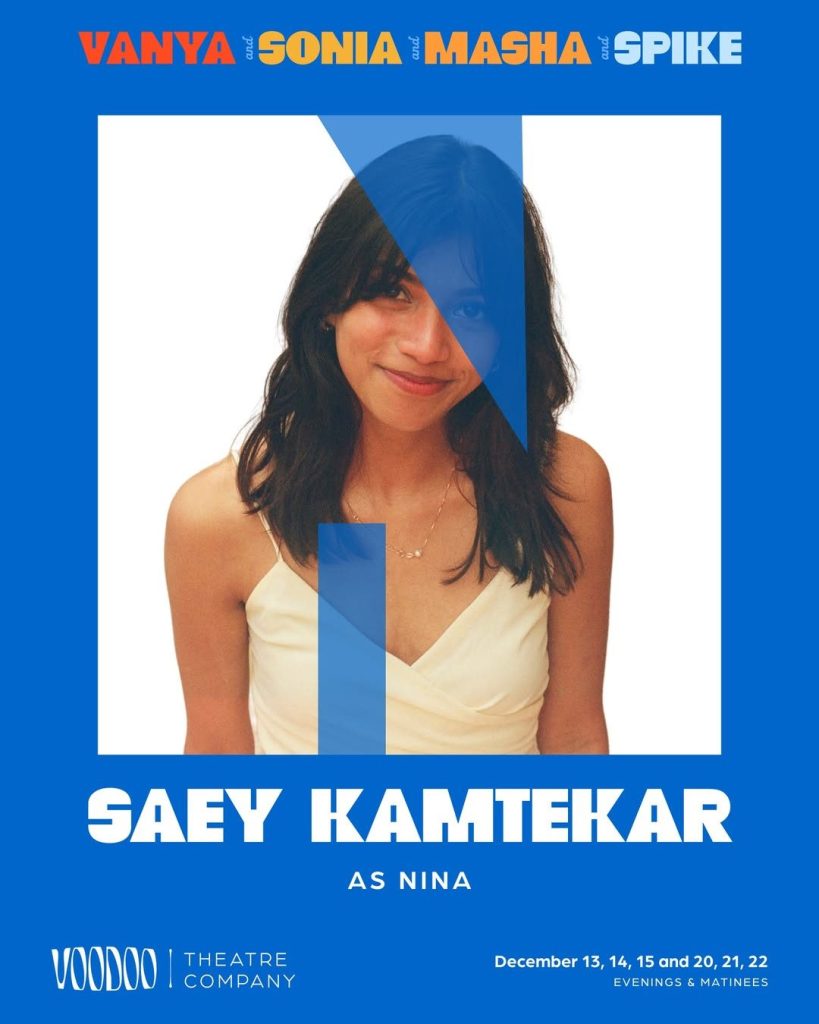
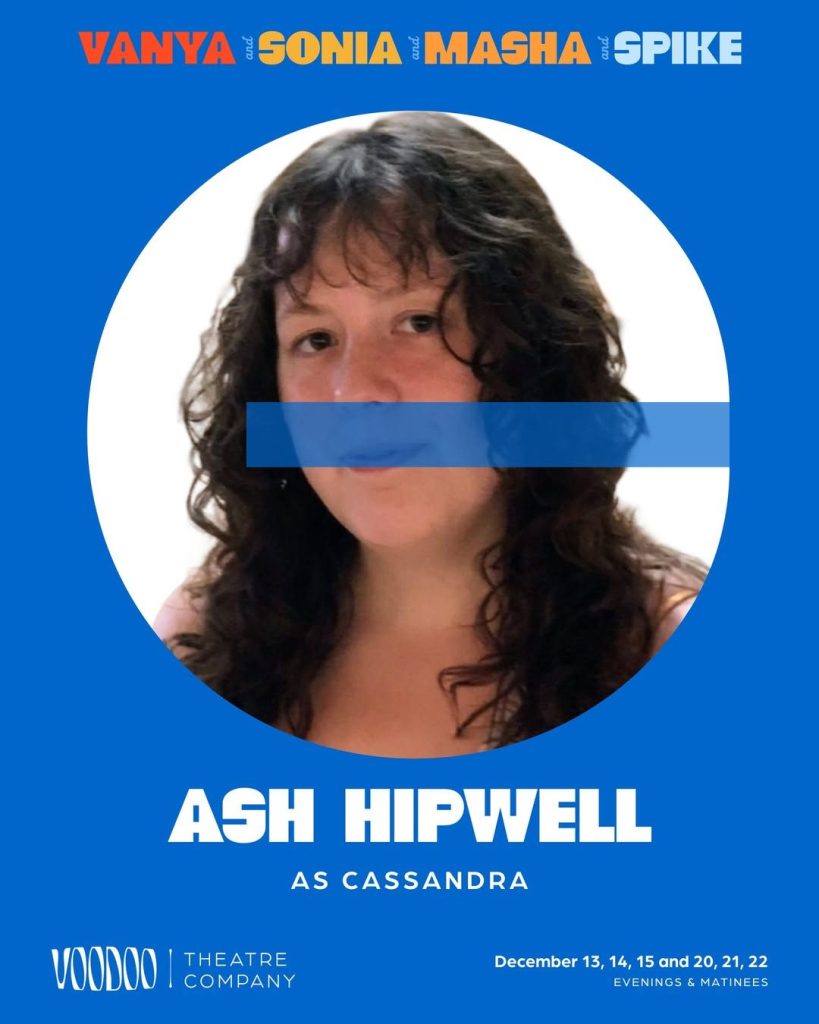
Special mention goes to Harrison J. Lind as Spike, whose physical comedy and over-the-top narcissism provide consistent laughs, and Ash Hipwell as Cassandra, the housekeeper-prophet, who skillfully navigates the role’s mix of camp and mysticism. Saey Kamtekar, as Nina, brought a charming earnestness to the production, offering a contrast to the more cynical characters.
The Direction and Staging
Patrick Kibbie’s direction ensures the play’s tonal shifts felt seamless: from laugh-out-loud farce to introspective drama. The pacing was brisk without rushing the quieter, Chekhovian moments that lent emotional weight to the story. Ellie Otis’s contributions as Assistant Director are evident in the detailed character interactions, particularly in scenes where non-verbal communication adds depth to the dialogue.
The set design deserves praise for its realism and attention to detail. The home in Bucks County was rendered with a warm, lived-in authenticity, contrasting beautifully with the characters’ exaggerated personas. The costuming was equally effective, with Masha’s Snow White outfit and Sonia’s extravagant gown standing out as visual metaphors for their respective self-perceptions.
The success of this production is due to the excellent work of its creative team. Stage Manager Taylynn Rushton ensures a seamless flow throughout the performance, while Zach Nielson’s lighting design brings depth and mood to every scene. Melanie Kamauu’s sound design skillfully enhances the atmosphere, and Sophie Van Nederveen’s costume design adds layers of character development through thoughtful and evocative wardrobe choices. Their collective efforts elevate the production, creating a visually and aurally captivating experience for the audience.
The Strengths
- Humor and Wit: Durang’s sharp dialogue and the cast’s comedic timing bring the script to life, earning frequent laughs from the audience. References to Chekhov are cleverly integrated without alienating those unfamiliar with his works.
- Emotional Resonance: Beneath the humor, VSMS explores themes of aging, unrealized dreams, and familial bonds with genuine pathos. Sonia’s phone-call scene, where she tentatively explores the possibility of romantic connection, was particularly moving.
- Dynamic Characterization: Each character’s arc feels distinct yet interconnected, creating a rich tapestry of interpersonal dynamics.
Areas for Improvement
- Spike’s Subplot: Spike’s character, while entertaining, sometimes lacks the depth compared to the other roles. His presence serves more as a foil than a fully developed individual, leaving some comedic opportunities untapped.
- Act II’s Pacing: While Act I builds anticipation effectively, portions of Act II drag, particularly during the aftermath of the costume party. Tightening these scenes could heighten the play’s overall rhythm, especially Vanya’s extended outburst.
FINAL THOUGHTS
Durang’s Vanya and Sonia and Masha and Spike thrives on its ability to juxtapose the farcical with the profound. Voodoo Theatre Company’s production captures this essence beautifully, delivering a performance that was both hilarious and moving. The combination of strong direction, talented performances, and Durang’s insightful writing ensured that the opening performance was a resounding success.
Vanya and Sonia and Masha and Spike is a delightful theatrical experience that blends humor with heartfelt exploration of human vulnerability. The opening performance showcased a production with strong performances and thoughtful direction, even if certain elements could benefit from refinement. Whether you’re a Chekhov aficionado or a newcomer to his themes, this production’s accessible wit and emotional depth make it a must-see for Utah’s theatre enthusiasts.
Christopher Durang’s Vanya and Sonia and Masha and Spike delves into themes of longing, identity, and the absurdities of modern life through the lens of familial relationships and self-reflection. The play seamlessly weaves Chekhovian melancholy with Durang’s absurdist humor, capturing the struggles of individuals as they grapple with regret, the passage of time, and the search for meaning in a rapidly changing world.
*Indicates member of Actors’ Equity Association.
Show Details
Tickets: $25
Contact: Voodoo Theatre Company (info@voodootheatrecompany.com) or Alliance Theater.org, 404.733.5000
Venue: Alliance Theater
Alliance Theater – Utah Arts Alliance, Directions
Theater company in Salt Lake City, Utah
Theatre can change lives. It certainly has changed mine. I embrace actors, directors, choreographers, lighting designers, sound designers, stage techs, and every other person that can possibly be involved. Theatre is a tribe, and we want to welcome you into ours.”
— PATRICK KIBBIE—
Voodoo Theatre Company Artistic Director/Founder
Located in: Trolley Square
Address: 602 E 500 S Suite E 101, Salt Lake City, UT 84102
Show Dates: December 13-22, 2024 (Thursday-Sundays 2 pm matinees and 7:30 pm shows)
Run Time: Approximately 2 hours and 30 minutes, including one intermission.
Recommended For: Ages 14 and up. Not suitable for children under 10 due to strong language and mature themes.
Reviews:
“Christopher Durang at his most hilarious and heartfelt.” – The Atlanta Journal-Constitution
“A masterful mix of humor and depth. Not to be missed!” – Broadway World Atlanta
Social Media:
Instagram: @AllianceTheater, @voodootheatrecompany
Facebook: @AllianceTheater, @voodootheatrecompany
Hashtag: #VSMSatAlliance, #voodootheatrecomany
For more details, visit: AllianceTheater.org
Voodoo Theatre Company presents Vanya and Sonia and Masha and Spike
Trolley Square, Alliance Theater (@alliancetheaterslc)
602 E 500 S Suite E101, Salt Lake City, UT 84102
Become a Sustaining Member Today for an Exclusive Opening Night Experience!
Study Helps and Extras for Discussion:
Key Ideas From the Play
- The Impact of Nostalgia and Change:
- The play’s characters, especially Vanya and Sonia, are stuck in a nostalgic haze for their lost youth and simpler times. Their rural Pennsylvania home symbolizes a place of stagnation, where change feels both inevitable and threatening.
- Middle-Aged Discontent:
- Durang reflects on midlife crises, as the siblings confront missed opportunities, unresolved sibling tensions, and existential dread. This is exemplified in Masha’s fading stardom, Sonia’s lifelong feelings of inadequacy, and Vanya’s nostalgic idealization of the past.
- The Absurdity of Modern Life:
- Durang contrasts the siblings’ Chekhovian despair with the shallowness represented by Spike, whose obsession with appearance and social media reflects contemporary society’s fixation on youth and superficiality.
- Finding Hope Amidst Chaos:
- Despite its satirical tone, the play ends on a note of reconciliation and optimism, as the characters begin to accept themselves and each other, finding comfort in their shared connections.
The play within the play and the self-aware humor enhance the Chekhovian themes, while Spike’s modern, shallow exuberance injects an absurdist element. In doing so, Durang critiques both the self-seriousness of traditional literary tropes and the absurdities of contemporary life, creating a work that is both a homage and a satire.
1. How important is it to know about the plays of Chekhov and Aeschylus in order to get the jokes in Christopher Durang’s play?
2. Does Cassandra show the same degree of “realism” as the other characters, or does she embody some other kind of dramatic style?
3. Does Spike’s name make him different from the other characters? If so, how?
4. What effect does Sonia’s costume have on her behavior? Have you ever worn a costume? If so, did that affect your behavior or your personality? How?
5. What effect does Vanya’s long monologue have on your opinion of his character?
6. Why does Masha want everybody to dress up as a character from the Snow White story?
7. What do you think will happen between Sonia and Joe in the long run?
8. Will the blue heron show up again? Why? Why not?
9. What do Spike’s and Nina’s tastes in film tell us about them as characters?
10. Who was Ingmar Bergman?
11. What is Smiles of a Summer Night?
12. Did you like Vanya’s play? Why? Why not?
13. Are meteorites related to “global warming?”


Leave a Reply