

Pioneer Theatre Company | World Premiere Musical
By Will Van Dyke & Jeff Talbott
Directed by Ellie Heyman
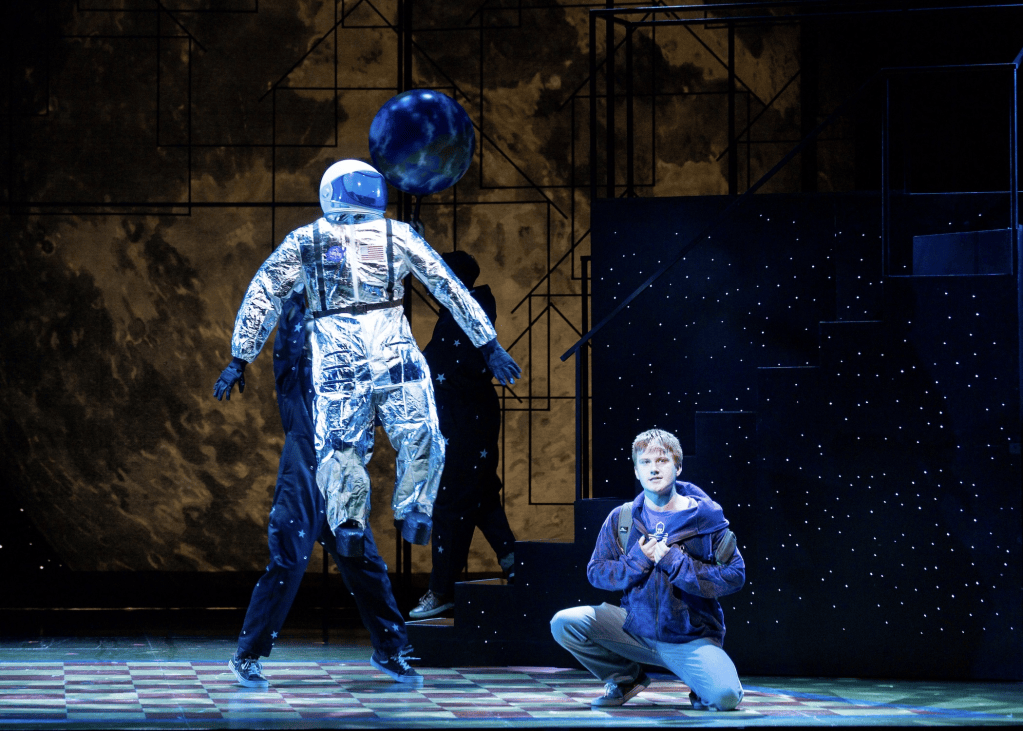
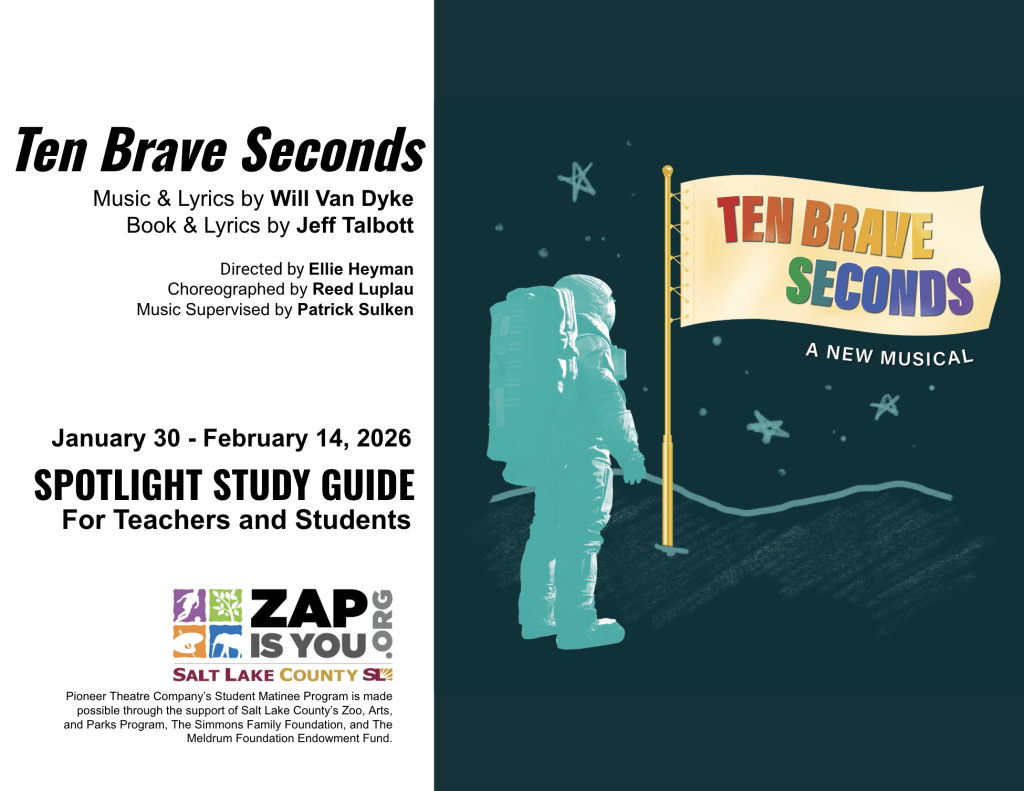
SALT LAKE CITY, UT—Ten Brave Seconds is an emotional show, but it earns that emotion by doing serious heavy lifting. Rather than asking the audience to be moved by feeling alone, the musical builds its entire structure around a precise, radical idea: bravery is not a personality trait or a triumphant revelation. It is a unit of time. Ten seconds. Long enough to speak. Long enough to stay. Long enough to step toward someone instead of away. Throughout the show, recurring astronaut imagery and space metaphors hover at the edges of the story—suggesting isolation, distance, and the fantasy of escape—only to be quietly challenged by the musical’s insistence on presence and connection. That this world premiere arrives with such clarity and care speaks not only to its creators but to Pioneer Theatre Company’s continued commitment to developing new musicals that trust audiences with complexity.
Set in Wooster, Ohio, on April 28, 2015, the musical unfolds over the course of a single school day. It follows Mike, a teenager navigating family grief, social pressure at school, and the fear of naming his own queerness aloud. The scope is deliberately contained, but the ambitions are not. By narrowing its timeline, Ten Brave Seconds sharpens its focus: what matters is not whether Mike becomes “brave,” but whether he can manage the next threshold in front of him—one conversation, one breath, one choice at a time.
Analysis: What the Show Is Doing—and Why It Matters
At its core, Ten Brave Seconds reframes heroism. Rather than presenting courage as triumph or transformation, the musical treats it as duration—a survivable span of time that allows for imperfection. This is a meaningful intervention in a genre that often equates bravery with resolution.
The show’s emotional intelligence lies in its refusal of clean arcs. Coming out is not staged as a climax or a moment of catharsis. It arrives awkwardly, mid-spiral, entangled with exhaustion and unresolved loss. The consequences ripple outward: friendships strain, words land wrong, intentions fracture. What follows is not instant understanding but repair—slow, imperfect, ongoing. Honesty complicates things before it clarifies them.
At times, the musical returns to the same emotional truth again and again: that life is hard, that people miscommunicate, that forward motion feels stalled. This repetition can momentarily feel redundant, as if the story is circling rather than advancing. But that circling ultimately reveals itself as purposeful. Ten Brave Seconds is not interested in depicting progress as linear. It understands that grief, adolescence, and identity formation often involve saying the same things repeatedly—getting them wrong, saying them again, and only slowly learning how to mean them differently. The show’s insistence on revisiting this impasse underscores its central claim: that responsibility does not emerge from clarity alone, but from the decision to stay engaged even when nothing seems to be working.
That is, ultimately, what being a teenager is all about.
Sometimes, when I think back on my own high school years, I wince—it’s an experience that can still feel physically painful in memory. Ten Brave Seconds captures that discomfort with rare authenticity. It understands adolescence not as nostalgia or spectacle, but as a period marked by exposure, missteps, and the constant fear of being seen incorrectly.

Structure and Thematic Engine
One of the show’s most effective strategies is its repeated use of counting. What begins as a grounding technique for anxiety gradually becomes a narrative engine. Counting marks the moments where endurance turns into action. It structures the rhythm of the day and teaches the audience how to watch the story: not as a march toward resolution, but as a series of thresholds.
Can he do the next ten seconds?
Can he stay in the room?
Can he try again after getting it wrong?
Crucially, the show links this private struggle to public belonging. Through a recurring classroom thread—anchored by the history teacher Mr. G—the musical widens its scope. Courage here is not just self-expression; it is participation. Identity is not framed solely as an interior truth, but as a civic presence. To be seen, the show suggests, is also to be accountable.
Mr. G emerges as one of the musical’s most compelling figures. His lines—“Read a damn newspaper,” “You can’t control how people react—you can only decide what you do next,” and “History is not just a lesson—it’s a call to action”—function not as didactic slogans, but as invitations. He reframes survival as engagement, insisting that change happens when people stop isolating and start joining.
Performance Highlights
The performances in Ten Brave Seconds are grounded in restraint rather than flourish—a choice that serves the material precisely because so many of the artists involved are capable of far more overt display. This is a cast stacked with Broadway veterans and elite vocalists, performers fully capable of vocal spectacle who instead place technique in service of character, listening, and presence. The result is a kind of precision that feels intentional rather than diminished: emotional truth carried not by excess, but by control.
Carson Stewart (Broadway: The Notebook; Off-Broadway: The Gospel According to Heather) anchors the production as Mike with an emotionally precise performance that never overstates the character’s turmoil. Stewart’s voice is clear, controlled, and expressive, but it is his physicality—counting, pacing, hesitating—that renders the internal struggle legible without melodrama. He resists musical-theatre excess in favor of specificity, allowing the audience to feel the pressure of each threshold without being instructed how to respond.
As Mr. G, John Cariani (Broadway: Fiddler on the Roof [Tony nomination], Broadway: Something Rotten, The Band’s Visit, Caroline, or Change) provides moral ballast through warmth, humor, and clarity. Cariani’s presence is quietly authoritative, and his vocal work—measured, conversational, and grounded—mirrors the character’s philosophy. His classroom scenes function as more than exposition; they are moments where the musical articulates its thesis about participation, responsibility, and civic belonging. Mr. G listens, challenges, and stays—an embodiment of the kind of courage the show quietly advocates.
As Carl, Will Blum (Broadway: Beetlejuice, Torch Song, School of Rock, The Book of Mormon) brings depth and volatility to a role shaped by grief and displacement. Blum is a performer with enormous vocal power and comic instinct. His singing is expressive, allowing anger, humor, and tenderness to coexist without tipping into excess. The result is a portrayal that feels lived-in rather than theatricalized, grounding Carl’s volatility in recognizable pain.
As Becky, Mike’s sister, Heidi Farber brings a grounded sincerity that quietly deepens the production’s emotional landscape. Her performance captures the particular ache of sibling grief—the way care, frustration, and helplessness coexist when loss reshapes a family unevenly. Small gestures and attentive listening do much of the work, allowing Becky’s concern to register without overt display. In a show so concerned with courage as endurance, Becky’s quiet steadiness becomes its own form of bravery.
Amber Iman (Tony and Drama League Award nominee; Broadway: Lempicka, Shuffle Along; National Tour: Hamilton) appears as Sally only briefly and through a single musical moment rather than sustained onstage presence, her contribution is nonetheless extraordinary. The song lands with a quiet force, offering emotional grounding and perspective at a crucial juncture in the narrative. Iman’s voice carries history, care, and authority—its resonance shaped as much by restraint as by power—making Sally feel fully present even in absence. Stewart’s acting in response to this moment is exceptional; his stillness, listening, and visible recalibration register the song’s impact in real time, allowing the audience to feel how profoundly it alters Mike’s emotional footing. It’s a reminder of how powerful a single, well-placed song can be when entrusted to the right performer—and how meaningfully it can resonate when met with equally attentive acting.
Supporting performances among the teens capture the volatility of adolescence with specificity. Jessica Money’s Gabi (Regional: The 25th Annual Putnam County Spelling Bee, The Color Purple, Falsettos) is especially well drawn: messy, unresolved, and deeply human. Money’s vocal and emotional control allows hurt, loyalty, and confusion to coexist, resisting reductive binaries of “supportive” or “rejecting.”
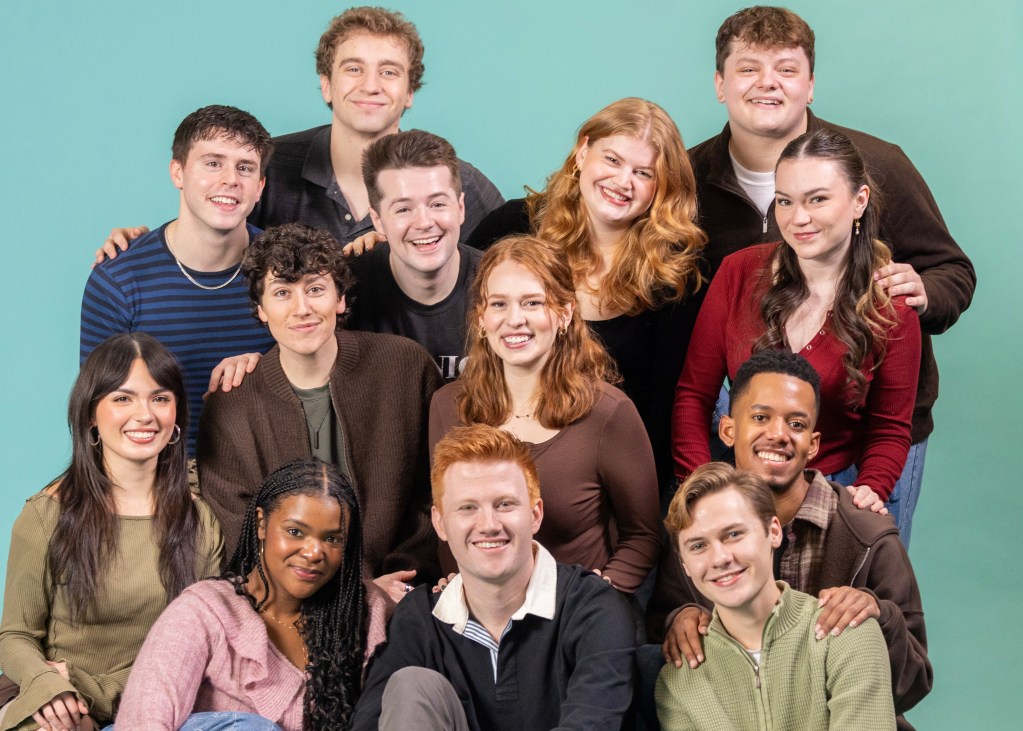
Luke Kolbe Mannikus (Broadway: Matilda, Pippin, Priscilla Queen of the Desert) brings a grounded presence to Tim, lending emotional weight to moments of peer interaction and support. Ensemble members Sydney Rudel, Harrison Timm, and Ella Mei Williamson—many drawn from Utah’s own training programs—contribute to the production’s authenticity, reinforcing the sense that this story is unfolding in a lived, communal space rather than an abstract high-school fantasy. These supporting roles give texture to the day Mike is trying to survive, reminding us how many small interactions accumulate into something overwhelming.
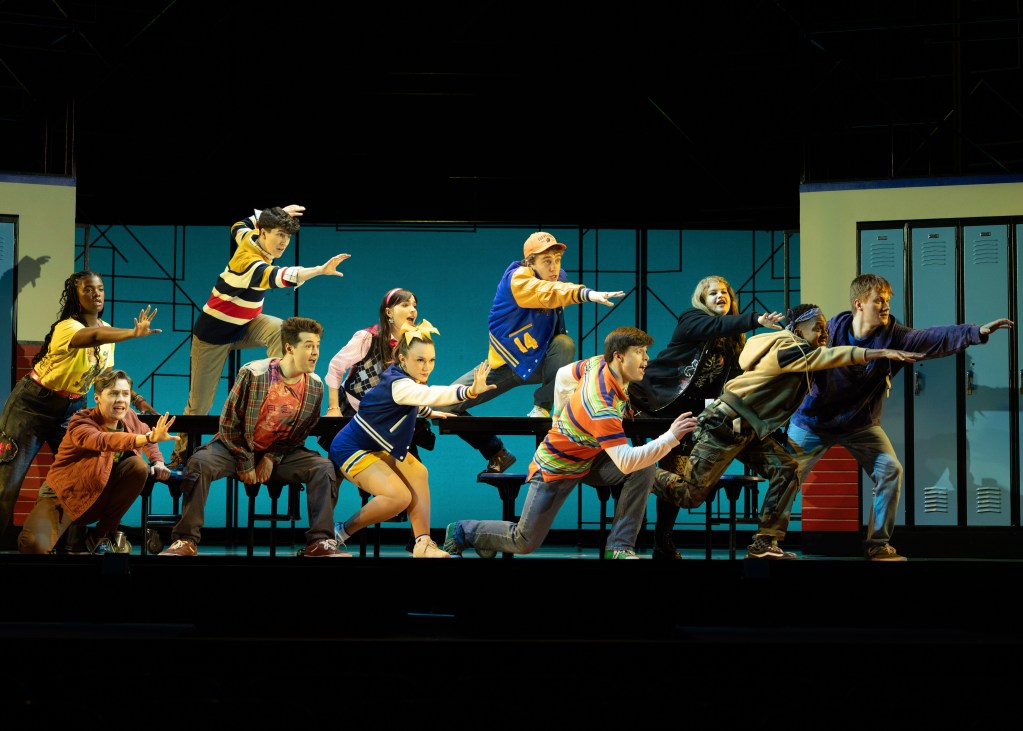
The teen ensemble—featuring Nick Eibler (Broadway: The Prom), Jalen Michael Jones (PTC’s The Prom, Bye Bye Birdie at The Kennedy Center), Zachary Daniel Jones (Broadway: Gypsy, Wicked, Beetlejuice), and Jordan Cruz (PTC: Jersey Boys, Waitress, The Prom)—creates a social environment that feels crowded, watchful, and inescapably public. Their collective vocal strength is evident, but it is carefully calibrated, reinforcing the sense that coming out—and growing up—never happens in isolation.
The audience’s audible reaction during Mike’s coming-out scene—particularly when his father responds badly—was striking. It was genuinely heartwarming to witness how far Salt Lake City has come, and how visibly this story resonated in the room. The reaction was not one of shock, but recognition—an indication that Ten Brave Seconds is meeting its audience where they are, and inviting them to stay.
Music, Lyrics, and Craft
Because Ten Brave Seconds is credited jointly for lyrics, it is most revealing to consider how its elements function together rather than to assign individual authorship.
Will Van Dyke’s score favors clarity over bombast, allowing songs to emerge organically from thought and conflict rather than interrupting them. Standout numbers include “Day One,” “Ride to the River,” “Love Is Just a Pop Quiz,” “Beautiful Boys of Boystown,” and “Straight,” which capture adolescent vulnerability with striking specificity, pushing back against the glossy high-school musical fantasy in favor of something far more recognizable.
At times, a few songs feel slightly word and syllable-heavy, with word choice occasionally impeding musical flow. These moments stand out precisely because so much of the score works so well. Still, they feel less like missteps than signs of a piece stretching into new terrain.
Talbott and Van Dyke’s gifts as writers are never in doubt. Ten Brave Seconds is thoughtful, humane, and deeply considered, and even its rough edges feel like part of a meaningful evolution rather than a miscalculation. The piece makes a compelling case for this creative partnership as storytellers expanding their range—ones whose future in musical theatre feels not only promising, but necessary.
That sense of expansion is most evident in the musical’s late addition of Sally’s solo, performed with extraordinary force by Iman. While the song offers a measure of closure—and is undeniably beautiful—it also feels slightly at odds with the musical’s larger commitments. Ten Brave Seconds is so attentive to unfinished conversations, to the reality that not every wound is named or soothed, that this moment of articulation registers almost as a gift belatedly remembered rather than an inevitability fully earned. In life, we do not always receive that kind of summation, and the show is usually braver for acknowledging that. Even so, the impulse behind the song feels generous rather than misguided: an offering of possibility rather than a demand for resolution.
Direction and Design
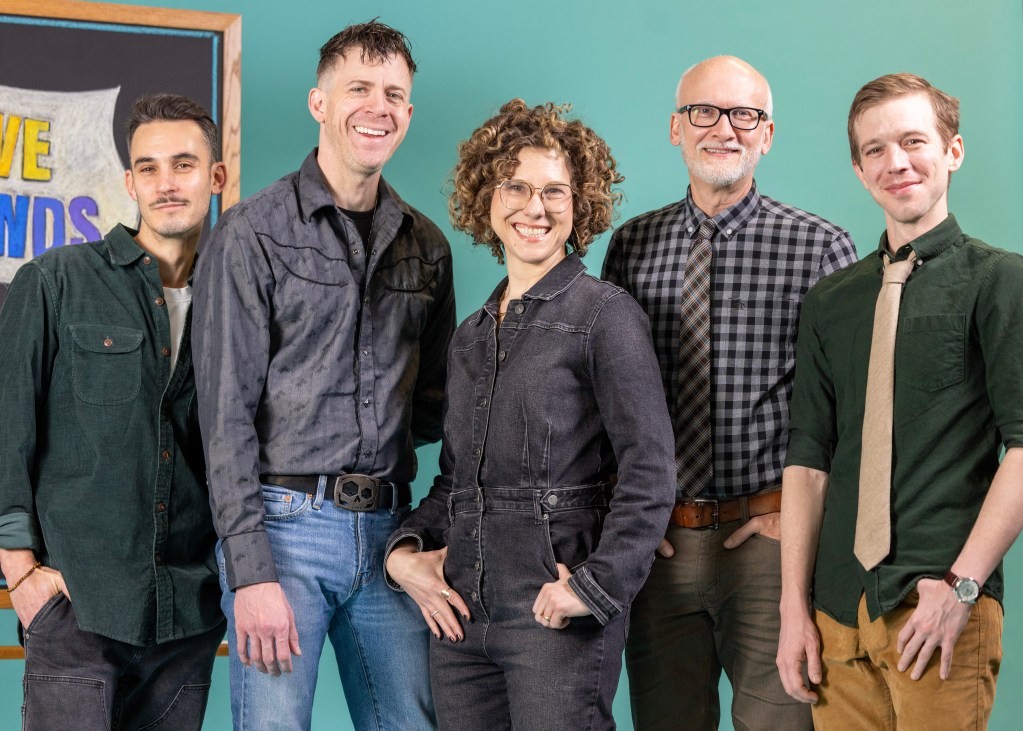
Director Ellie Heyman emphasizes intimacy and presence throughout Ten Brave Seconds. Scenes are staged to prioritize listening; characters are often required to remain in the room after difficult truths are spoken, with no easy exit offered. This approach reinforces the production’s commitment to emotional accountability and to the labor of staying engaged when retreat would be easier.
Reed Luplau’s choreography is dynamic and deeply attuned to the emotional world of the piece, using movement to register tension, hesitation, and release rather than spectacle. Physicality emerges as an extension of interior pressure—bodies pacing, bracing, retreating, or lingering—so that movement reads as emotional overflow rather than formalized dance. Costume designer Brenda Van der Wiel complements this approach with designs that feel lived-in, contemporary, and emotionally precise, grounding the characters in a recognizable world without tipping into visual shorthand.
That ethic of restraint and specificity is mirrored in the scenic design by James Noone, which is smart and intentionally understated. The metal-framed suburban house backdrop is particularly effective, offering a visual language that feels both familiar and exposed. Its skeletal structure suggests domestic stability without insulation—walls that exist, but don’t quite protect. The choice mirrors the show’s emotional terrain: a home that holds grief, tension, and love simultaneously, without resolving them into comfort. Rather than sentimentalizing suburbia, the design renders it porous and unfinished, reinforcing the musical’s focus on vulnerability and endurance.
The school environments are equally well-realized. Supported by José Santiago’s lighting design and Aaron Hubbard’s sound design, classrooms, hallways, and shared institutional spaces are rendered with clarity rather than excess, allowing the environment to function as pressure rather than spectacle. These spaces feel inescapably public—sites of observation, judgment, and exposure—which heightens the stakes of Mike’s interior struggle. School is not treated as a neutral backdrop but as an active force shaping behavior in real time.
That sense of forward motion is further reinforced by the band, under the supervision of music supervisor Patrick Sulken. Alongside Will Van Dyke’s orchestrations and vocal arrangements, the musicians keep the score grounded and responsive rather than overpowering. The music operates as an emotional undercurrent, supporting scenes without dictating them, and allowing songs to emerge organically from thought and conflict rather than interrupting them.
Taken together, the domestic and institutional settings create a cumulative effect: the day feels relentless, but navigable—exactly the tension the title promises.

Closing
By the time Ten Brave Seconds reaches its final moments, it does not fully “solve” Mike’s life, but it does allow for a measure of articulation. What the musical ultimately provides is not resolution, but shift: the sense that something has moved, that the next ten seconds might be possible, that participation rather than perfection is the measure of courage. In a theatrical landscape that often mistakes catharsis for depth, Ten Brave Seconds stands out as a musical willing to ask harder questions—and thoughtful enough to recognize when closure can be offered as a gift rather than a guarantee.
Show Info
Ten Brave Seconds
World Premiere Musical
Creative Team
Music & Lyrics: Will Van Dyke
Book & Lyrics: Jeff Talbott
Director: Ellie Heyman
Choreographer: Reed Luplau
Music Supervisor: Patrick Sulken
Scenic Designer: James Noone
Costume Designer: Brenda Van der Wiel
Lighting Designer: José Santiago
Sound Designer: Aaron Hubbard
Hair & Makeup Designer: Kate Casalino
Orchestrations & Vocal Arrangements: Will Van Dyke & Patrick Sulken
Production Stage Manager: James O. Hansen
Casting: Andrew Fem, Casting by Them
Cast
Mike: Carson Stewart
Carl: Will Blum
Becky: Heidi Farber
Gabby: Jessica Money
Tim: Luke Kolbe Mannikus
Mr. G: John Cariani
Sally: Amber Iman
Teens:
Nick Eibler
Zachary Daniel Jones
Jalen Michael Jones
Laura Leo Kelly
Jordan Cruz
Sydney Rudel
Harrison Timm
Ella Mei Williamson
Swings:
Ariana Bagley
Kaden Conrad
Production Details
Producing Company: Pioneer Theatre Company
Venue: Simmons Pioneer Memorial Theatre
Dates: January 30 – February 14, 2026
Runtime: Approximately 2 hours and 30 minutes, including one 15-minute intermission
Accessibility
ASL-Interpreted Performance: Monday, February 9 at 7:00 PM
Community Program
Curtain Call for All (Name Your Own Price): A select number of “name your own price” tickets (starting at $15) are available for every performance of Ten Brave Seconds. Book now by calling 801-581-6961. Learn more about this program here.


Leave a Reply