

Salt Lake City, UT—In John Logan’s RED, the tension glows—“with a sort of rapture,” as Rothko describes Caravaggio—between artist and apprentice, between control and creation. What unfolds is not simply a portrait of a painter at work, but a charged and intimate exploration of power, authorship, and what it means to make something that lasts.
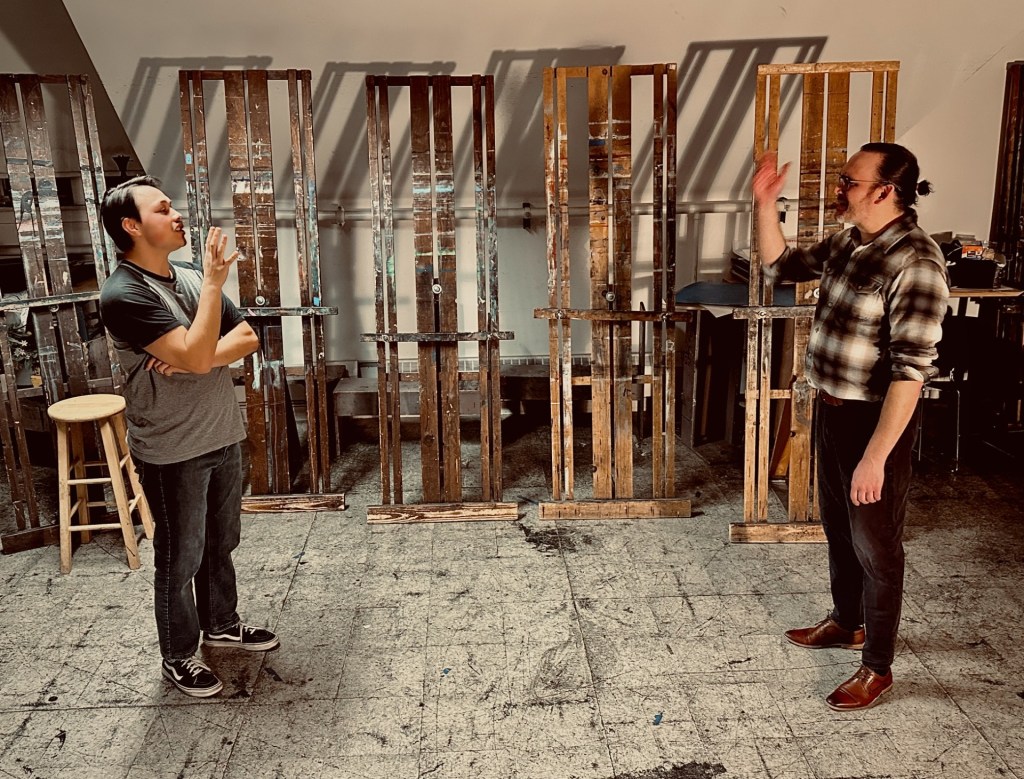
Presented by Sackerson & Lil Poppet Productions at Westminster University’s Converse Building, this production embraces an intimate, loft-like setting that mirrors Rothko’s studio, drawing the audience directly into the space of creation. Running from April 16 to April 26, the limited run reinforces the urgency of the experience. This is not a distant, untouchable work of art, but something immediate—unfolding in real time.
In this setting, RED becomes more than a biographical drama. It transforms into a confrontation between generations, between artistic philosophies, and between the desire to preserve legacy and the need to challenge it.
About the Artist and the Play
Mark Rothko (September 25, 1903 – February 25, 1970) was a Latvian-born American painter best known for his large-scale color field paintings—vast canvases of layered reds, blacks, and other hues meant to evoke deep emotional and spiritual responses. A central figure in Abstract Expressionism, Rothko believed art should provoke something visceral rather than exist as decoration.
Logan’s Tony Award-winning play RED (2010) focuses on a defining moment in Rothko’s career. Set in his New York studio in the late 1950s, the play follows Rothko as he works on the Seagram Murals alongside his assistant, Ken—a fictional figure representing a younger generation of artists. Under Rothko’s watchful eye, what begins as instruction evolves into a complex and often volatile relationship.
As Rothko takes on the commission for the Four Seasons restaurant in the Philip Johnson-designed Seagram Building—a project that begins to test the boundaries of his artistic convictions—he attempts to shape not only Ken’s technique, but his entire way of seeing the world. Yet Ken gradually begins to question that authority, transforming their relationship into a struggle over meaning, control, and legacy.
This rigidity is not merely theatrical. In a 1943 letter to The New York Times, written alongside Adolph Gottlieb, Rothko insisted that “there is no such thing as a good painting about nothing… we favor the simple expression of complex thought.” In RED, that philosophy becomes something more than belief—it becomes a standard that governs how art is made, taught, and understood.
Mentorship or Gatekeeping?
At its core, RED stages the uneasy intimacy of mentorship—one that often veers into gatekeeping. Rothko insists on seriousness, rejecting surface-level interpretation. For him, art must challenge, unsettle, and demand something from its audience. But this insistence quickly reveals itself as a form of control.
Early in the play, Rothko explodes at Ken simply for expressing an opinion about the color red—a moment that exposes how fragile his authority truly is. This is not mentorship rooted in dialogue, but in enforcement.
The dynamic between Rothko and Ken feels strikingly familiar, particularly within academic spaces. Rothko does not simply teach technique—he instructs Ken in how to think, how to see, and how to assign value. What begins as mentorship gradually reveals itself as something more controlled, where authority defines not only knowledge, but the terms under which it can be questioned.
At times, the relationship resembles a form of academic training. Rothko is not only passing on knowledge—he is reproducing a way of thinking that preserves a particular version of the canon. The question becomes less about whether Ken will learn, and more about what he must accept in order to belong. The play, however, does not frame Rothko as a simple antagonist.
Yet even full participation does not grant agency. When Ken asks if Rothko values his opinion, Rothko responds bluntly: “Not at all.” The mentorship is clear—but so is the cost.

Performance Highlights
Tyson Baker delivers a commanding performance as Rothko, embodying both intellectual authority and emotional instability. His portrayal is intense without feeling forced, capturing a man whose certainty masks a deeper vulnerability. Baker handles Rothko’s dense, philosophical language with precision and intention, allowing each line to feel lived rather than recited. From the outset, there is something slightly unsettled beneath Rothko’s authority—a sense that control is not natural, but necessary, and Baker delivers these layers flawlessly.
Amona Faatau’s Ken provides a compelling counterbalance. His performance traces a clear arc, beginning with quiet attentiveness and evolving into confident self-assertion. There is an immediacy and relatability to Ken—an innocence that makes his eventual confrontation feel earned.
Together, their dynamic drives the production. The tension between them is not static, but constantly shifting, making their final exchanges all the more impactful.
Color as Conflict: Red, Black, and White
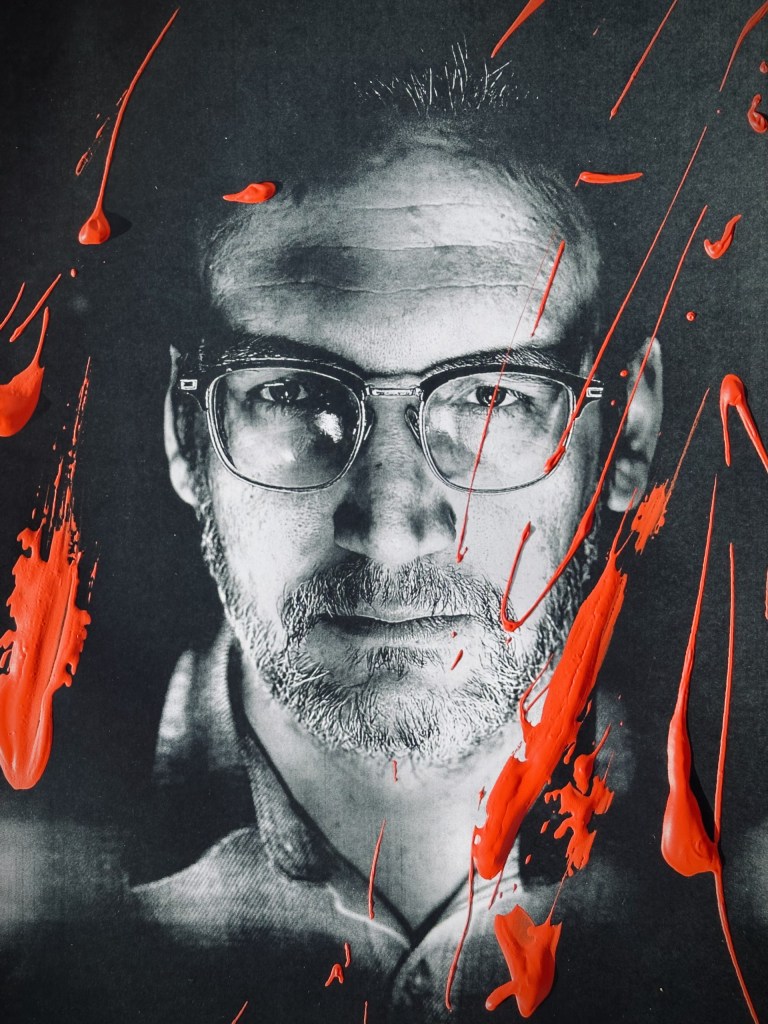
Color in RED is not merely aesthetic—it is philosophical, emotional, and deeply personal. For Rothko, red is visceral, tied to passion, intensity, and emotional truth. Black represents judgment and finality, echoing the idea of being “weighed in the balance and found wanting.”
Ken, however, interprets color differently. White evokes sterility—operating rooms, absence, even death. Where Rothko finds meaning in depth and darkness, Ken finds it in lived experience and memory.
These conflicting interpretations underscore one of the play’s central ideas: meaning is not fixed. Art does not exist in isolation—it is shaped by those who encounter it.
Direction & Design: Immersion in Art
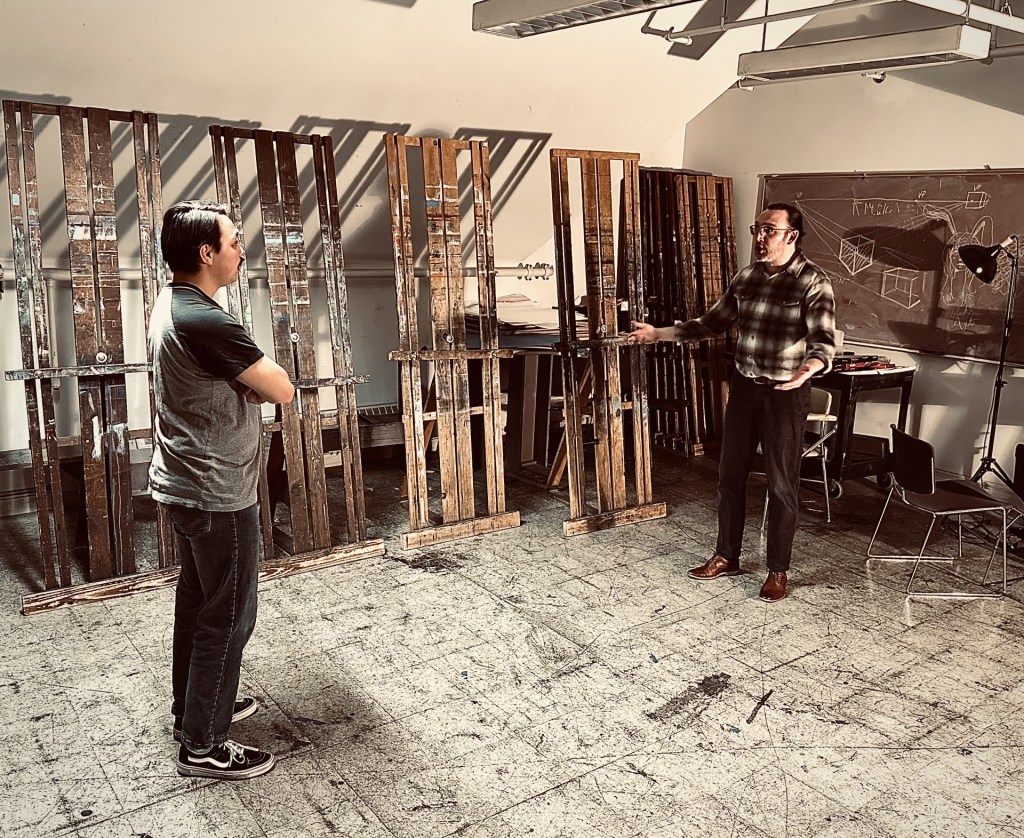
Director Morag Shepherd crafts an immersive and intimate experience through thoughtful staging. Known for her site-specific work, Shepherd utilizes the loft-like space at Westminster University to mirror an art studio—controlled, contained, and quietly oppressive. The small audience size enhances this effect, placing viewers directly inside the tension of the room. The production does not simply present Rothko’s world—it invites the audience to inhabit it.
The creative team supports this vision seamlessly. Dramaturg Tu’imana Talanoa provides rich contextual grounding (here), while stage manager Brynn Duncan ensures the production runs smoothly despite its technical demands.
The loft-like setting does more than resemble Rothko’s studio—it feels lived in. The proximity of the audience collapses the distance between watching and working, making each movement, pause, and burst of tension impossible to ignore.
The production’s sound design establishes character from the very beginning. Rothko enters to classical music, reinforcing a sense of tradition, discipline, and control. When Ken enters, the shift is subtle but noticeable—his presence introduces a different energy, one that feels newer, less rigid.
This contrast becomes more explicit later, when Rothko reacts negatively to Ken playing jazz. His rejection of the music is immediate and firm. It is not simply a matter of taste—it reveals a deeper resistance to change. For Rothko, control extends beyond the canvas; it shapes the environment, the process, and even the sounds that surround the work. Ken’s introduction of something new disrupts that control, signaling a broader challenge to Rothko’s authority.
Similarly, lighting also plays a central role in shaping the environment of the production. From the moment Rothko enters, he carefully adjusts the lights, ensuring they are set exactly to his preference. The space is evenly lit, controlled, and deliberate—nothing is left to chance. Throughout the play, lighting is not passive; it is something Rothko actively manages, returning to it as part of his process.
His rejection of natural light becomes particularly telling. Rothko insists on eliminating anything unpredictable—sunlight, shadows, even the possibility of change. For him, control over light is inseparable from control over the work itself. When Ken later questions this—asking what is wrong with natural light—it signals more than curiosity. It challenges Rothko’s entire worldview. The lighting, like the music, becomes another site of tension, revealing a deeper conflict between control and openness, tradition and change.
Taken together, these design choices do more than support the production—they embody its central tension. Every element of the space, from sound to lighting, reflects Rothko’s need for control while simultaneously exposing its limits. In doing so, the production makes visible what the play itself interrogates: the fragile balance between discipline and rigidity, and the inevitability of disruption.
Conclusion: The Legacy of Red
In the end, RED is not simply about painting—it is about power. It asks: Who defines meaning? Who controls legacy? And what happens when that control is challenged?
Ken’s final assertion does not dismantle Rothko—it forces him to recognize what he has long resisted: that meaning cannot be fully controlled, and that creation does not belong to one voice alone. The question lingers: Who truly defines great art—the artist, the audience, or the dialogue between them? This production does not answer it—and that is precisely its strength.
About the Show
RED by John Logan
Presented by Sackerson & Lil Poppet Productions
Directed by Morag Shepherd
STAGE MANAGER: Brynn Duncan
PRODUCERS: Morag Shepherd, Stephanie Stroud, Jesse Nepivoda, Brynn Duncan & Matthew Ivan Bennett
Dramaturg: Tu’imana Talanoa
Featuring:
Tyson Baker as Rothko
Amona Faatau as Ken
📍 Location:
Converse Building, 3rd Floor
Westminster University
1840 S 1300 E, Salt Lake City, UT
🗓 Dates & Times:
Sackerson Co & Lil Poppet present Red by John Logan
1840 S 1300 E, Salt Lake City, UT 84105, WESTMINSTER UNIVERSITY, Converse Hall – Room 311
Thursday April 16th-Sunday April 26th
Thursday, April 16 – Friday, April 17, 8pm
Saturday, April 18 – Sunday, April 19, 6pm
Thursday, April 23 – Friday, April 24, 8pm
Saturday, April 25 – Sunday, April 26, 6pm
⚠️ Content Note:
This production includes onstage smoking (e-cigarettes). Recommended for ages 14+
Tickets available through Humanitix.


Leave a Reply