The 10-time Grammy winner reflects on music as medicine, why practice—not “talent”—is the true secret, and the radical freedom of playing exactly what he feels.
Arturo Sandoval calls himself “just a music lover,” but the scope of his career—Presidential Medal of Freedom, 10 Grammy Awards, and performances from Havana to Abbey Road—suggests something more enduring: relentless devotion.
In this candid conversation, Sandoval reflects on My Foolish Heart (2024), his recent album of “mellow, romantic” music that he describes as “a remedy, like a balm” in a world saturated with bad news. He traces his path from a small Cuban village and early gigs at age eleven to classical training, founding Irakere, and a lifelong habit of practice that still anchors him.
That devotion is nowhere more evident than in Sandoval’s Trumpet Evolution—a sweeping tribute that turns his horn into a time machine.
Trumpet Evolution: A Journey Through Time and History
When Arturo Sandoval picks up the trumpet, he becomes a time traveler. His sound doesn’t just move forward—it loops through a century of music, revisiting the landmarks that shaped both jazz and classical traditions. Trumpet Evolution, a project he calls his “favorite” because it’s more than a record—it’s a love letter to the instrument and the legends who defined it.
The journey begins in the roots of jazz: King Oliver’s “Dipper Mouth Blues” and “When It’s Sleepy Time Down South” conjure smoky clubs and the birth of swing, while “At the Jazz Band Ball” carries the jubilant pulse of the 1920s. Then comes a flash of bravura with “La Virgen De La Macarena,” a virtuosic Spanish showcase that became a trumpet rite of passage.
The mood shifts to introspection with “I Can’t Get Started,” dripping with ballad lyricism, before diving into the swagger of Ellington’s “Concerto for Cootie,” a showcase of blues-infused elegance originally written for trumpeter Cootie Williams. Sandoval then channels the bebop innovators: Clifford Brown’s “Joy Spring” becomes a masterclass in fleet agility. The Afro-Cuban heartbeat returns in Dizzy Gillespie’s “Manteca,” a tribute to the mentor who changed Sandoval’s life and brought him from Cuba to the world stage.
And just when you think you know where the road leads, Sandoval pivots to the concert hall, performing the Concerto in D Major – First Movement with clarity and poise—proof that few musicians can inhabit these two worlds so completely. Then comes the fire: in a finale inspired by Maynard Ferguson, he unleashes high-note heroics that soar into trumpet altitudes most players never dream of.
Trumpet Evolution is more than a retrospective—it’s an archive of sound and feeling, bridging Cuban rhythms, European traditions, and the boundless imagination of an artist who refuses to be confined by genre. From bebop burners to tender ballads, from Havana to Hollywood, Sandoval turns music into history in motion—and he’s still writing the next chapter. For him, this album isn’t just a tribute; it’s a manifesto of passion, discipline, and fearless curiosity.
In what follows, my wide-ranging interview with the legendary trumpeter speaks candidly about his recent album My Foolish Heart, his obsession with harmony, his love for the piano, and the defiant freedom that still guides everything he plays.
Edited for length and clarity.
On Music as a Balm in a World of Noise
If you know Sandoval for the fire-breathing trumpet lines of Rumba Palace or the explosive energy of Dear Diz (Every Day I Think of You), his latest album might sound like a whisper. My Foolish Heart is intimate—lush piano harmonies, tender horn phrasing, and a softness that feels almost radical in an era defined by chaos. “I love that album, but it’s extremely mellow, soft, romantic. It’s something I needed,” he says.
Why this change in tone? Sandoval explains: “I felt the necessity to do it because, especially nowadays, every time you open the news—oh my goodness, it’s so much tension and conflict and war. I felt a necessity to do that kind of album. It’s a kind of remedy, like a balm—which is opposite to the bunch of horrible news.”
He pauses, then adds with quiet conviction: “Even in difficult times, we have to concentrate on the sunny side of the street. Because otherwise, life is not worthy.”
For Sandoval, music is medicine-a counterweight to despair. His response to turmoil isn’t retreat; it’s creation. And when the world grows loud, his instinct is to play softly.
“The trumpet wins tonight; maybe you break even tomorrow.”
–Arturo Sandoval
On Genre and the Joy of Imitation
Sandoval resists the narrative of being a genre-hopping virtuoso. “No, not really,” he says with a shrug when I compliment his versatility. Then he reframes it:
“As I told you in the beginning, I am a music lover. I dedicate all my life to listening to everybody and everything, and I try to incorporate into my own thing as many genres and styles as possible.”
That ethos shaped Trumpet Evolution. It’s more than a recording—it’s a 100-year time capsule of trumpet sound, from Louis Armstrong to Clifford Brown to Maynard Ferguson.
“It’s a sincere homage, a tribute to 22 different remarkable trumpet players, starting from the beginning of the last century until today. … I love to imitate people. I have no complex, no problem with that. Some people say, ‘No, this is my style and that’s it.’ I listen to everything, and whatever I like, I love or appreciate. For me, it’s a lot of fun trying to duplicate that. At the same time, I learn from all of them.”
For Sandoval, imitation isn’t theft—it’s apprenticeship. It’s a dialogue across time, an act of reverence and curiosity that keeps traditions alive while expanding their borders.
On Collaboration and Ultimate Duets
If Trumpet Evolution was about honoring the past, Ultimate Duets was about building bridges. Released in 2018, the album pairs Sandoval with an eclectic roster of artists—icons like Stevie Wonder, Pharrell Williams, and Alejandro Sanz—each track a dialogue that proves music knows no borders.
What makes this album exceptional isn’t just the star power—it’s the arrangements. They don’t simply layer trumpet over vocals; they create a genuine conversation between instrumentalist and singer. Sandoval never overpowers his collaborators, yet he shines in every phrase. Tracks like “Corazón Partío” capture this balance perfectly: Sandoval’s phrasing complements the emotional arc of Alejandro Sanz’s voice, adding layers of color without competing for attention. It’s a masterclass in collaboration—where respect, trust, and artistry meet.
“I love that album,” Sandoval says, leaning forward as if the memories are still warm. “And I’m extremely grateful to all the great artists who accepted to be in my album. I’ll be eternally grateful to them, of course.”
This openness—the willingness to share the spotlight—reflects the same spirit that propelled Sandoval from rural Cuba to global stages: a refusal to be confined, a hunger to learn, and a deep respect for the artistry of others.
On Talent, Discipline, and Why Passion Wins
Ask Sandoval how he built his sound, and you’ll hear a manifesto against mythmaking. There’s no talk of divine gifts—only hunger and hard work.
“I always said that music saved my life,” he begins.
“I was a kind of homeless kid in the countryside of Cuba. My family was extremely poor. Nobody was involved in music or art at all before or after me. When I said I wanted to be a musician, everybody said, ‘What are you talking about?’ Even musicians in my village discouraged me so much. They said, ‘No, man, don’t even think about it. You’re never going to make it.’ They made me cry. They made me suffer.”
And then: “Some people put a lot of emphasis on the word ‘talent.’ My priorities are passion, dedication, discipline—and more passion. That makes the difference. You do any kind of sacrifice. You do the impossible to pursue your desire—what you want to do with your life.”
In a culture obsessed with prodigies, Sandoval’s ethic feels radical: talent is overrated; persistence is everything.
Smuggling Jazz Through the Silence
In 1970s Cuba, jazz wasn’t just unfashionable—it was forbidden. The revolutionary government labeled it “music of the imperialists,” a cultural contaminant in need of eradication. For Arturo Sandoval, this wasn’t the end of jazz; it was the beginning of a secret war fought with sound.
“In that time, it was forbidden even to mention the word ‘jazz,’” he recalls. “Such a stupidity, but we had to deal with that.”
The risks were real—government censors could cancel concerts, interrogate musicians, even ban them from performing. But instead of surrender, Sandoval and his compatriots in Irakere—a groundbreaking ensemble he co-founded in the early 1970s—chose ingenuity over silence.
“When we put together a band called Irakere in 1974, we were forbidden in the beginning to use the cymbals of the drums…because they said that was Rock and Roll or whatever—the music from the junkies, you know…We had to masquerade that, and the drum—instead of a cymbal—we got cowbells. Then we used all kinds of Afro-Cuban drums… But in the end, we were playing Bebop and jazz, but we masqueraded with that thing, and then they thought that we were experimenting with a new kind of Cuban music, which was our strategy.”
Sandoval’s story isn’t just about sound—it’s about survival. Before freedom became his anthem, music was his quiet rebellion against a system determined to silence it.
On Leaving Cuba and the Price of Freedom
When Arturo Sandoval fled Cuba in 1989, it wasn’t just an escape—it was a rebirth. The decision carried immeasurable risk: leaving behind family, friends, and the only home he had ever known for the uncertainty of exile.
“I knew if they caught me, the punishment could be terrible,” he recalled in his memoir (Sandoval, 2012).
Yet for Sandoval, the greater danger was staying. To remain in Cuba meant living a life where art was censored, where every note might be judged as political dissent.
“It’s been 66 and a half years of oppression there… No freedom at all. Especially the lack of freedom. I always said, No freedom, no life. That’s one of the things I never get tired to repeat, because I know about it. I didn’t read it in a book. I suffered in my blood and flesh.”
Freedom, for Sandoval, isn’t an abstract concept—it’s oxygen. It is the essential condition for creativity. In Cuba, every melody was filtered through state scrutiny, every artistic choice a negotiation with authority. To make art under those circumstances was to compromise its soul.
“When you play or create something, you shouldn’t think that somebody or some system or government is interfering with your emotion and your feeling. Whatever you want to share, you must feel absolutely free to say, ‘This is what I feel deep in my soul.’ That’s the only way art could be sincere and real.”
When Dizzy Gillespie helped orchestrate Sandoval’s defection during a 1990 tour, it fulfilled a dream decades in the making—a story later dramatized in HBO’s For Love or Country: The Arturo Sandoval Story. Gillespie’s intervention secured U.S. asylum for his protégé, opening the door to a life of creative freedom. But that liberation came at a cost: permanent separation from his homeland.
“I miss Cuba every day,” he told JazzTimes in 2013, “but I don’t miss the system. I never will.” (Liebman, 2013)
“Passion, dedication, discipline—that’s the secret. Not ‘talent.’”
–Arturo Sandoval
On Labels and Legacy
Sandoval has little patience for marketing categories that flatten history.
“I call music ‘music,’ and I get disappointed when I’m announced as a Latin jazz trumpet player. I hate that—especially because that word ‘Latin’ is an old language. Another thing that always bothered me: it was an African American person, John Birks Gillespie, and two Cubans, Mario Bauzá and Chano Pozo—those three gentlemen created that style they named Afro-Cuban jazz. Who has the authority to change the name of somebody else’s creation?”
What Sandoval refers to is the shift from the original term Afro-Cuban jazz, coined in the 1940s, to the later marketing label Latin jazz. The pioneers—Gillespie, Bauzá, and Pozo—fused bebop with Cuban rhythms, creating a hybrid that reshaped jazz. Their 1947 composition “Manteca” remains a milestone of this genre. But as the style gained commercial traction, record companies bundled Cuban, Brazilian, and Caribbean influences under a vague “Latin” umbrella—flattening cultural nuance.
For Sandoval, this isn’t semantics—it’s about respect for history. His answer to the renaming? “Just call it music.”
That fight for honesty in art explains why Sandoval bristles at labels. For him, music isn’t a category—it’s a universal language that deserves precision and respect.
If trumpet is his voice, piano is his compass—a grounding force that sharpens his sense of harmony and fuels his philosophy of arrangement.
On Piano, Harmony, and Why Arrangements Matter
Though the trumpet is his weapon of choice, Sandoval’s creative anchor is the piano.
“Piano means music. You can play more than 10 notes at the same time. For composition, piano is crucial; for improvisation, extremely mandatory. If you want to improvise deeply within the chord and the harmony, my recommendation is: listen to that music a lot, but also put your fingers on the keyboard.”
Then comes a lesson every arranger should memorize:
“Most humans listen to the melody—the top. But the counterpoint, the harmony—that’s what makes music beautiful. A great melody with the wrong arrangement—you screw the thing. A melody with a great arrangement could be a piece of art.”
Even after decades of shaping jazz, Sandoval’s true muse lies beyond the genre—a reminder that sincerity, not style, is the true measure of music.
On Media and the Crisis of Jazz Visibility
When I ask how jazz fits into the media landscape, Sandoval doesn’t hide his frustration:
“I have lived in the U.S. for 35-plus years. I never saw one minute of jazz music on television in the U.S.—the country that invented that music. You go to Tokyo, and you’ll have two hours of jazz in prime time. We have to protect and defend one of the most important art creations in the U.S.—jazz music.”
Instead, he laments, mainstream media often elevates songs with explicit or degrading language while neglecting jazz—a genre he calls one of America’s greatest cultural legacies. For Sandoval, this isn’t nostalgia; it’s urgency. Jazz, he believes, is an endangered heritage that needs caretakers, not gatekeepers.
“When I’m onstage, I must feel absolutely free to share what’s deep in my soul.”
—Arturo Sandoval
On Rachmaninoff and Legacy
Even after decades as a jazz icon, Arturo Sandoval names a Russian composer—not a jazz giant—as his greatest muse:
“My favorite piece of music ever is the second movement of Piano Concerto No. 2 by Sergei Rachmaninoff.”
He pauses when he says this, almost reverent, and then explains why. “That piece—it’s so full of feeling. You hear it, and it goes straight to the heart. That’s what music should do.”
For Sandoval, genres are irrelevant; emotion is everything: “Music is not about style or category. It’s about sincerity. If it doesn’t come from the heart, it’s nothing.”
That belief has guided his life and his craft: “You have to respect the music. That’s the most important thing. I never get tired of saying that—respect for the music, respect for the audience, and discipline. Every day, I wake up, and I practice. Even now. Because music is a blessing, and you cannot take it for granted.”
On Dizzy Gillespie and the Battle with the Trumpet
Arturo Sandoval recalls one of the most humbling lessons from his mentor, John Birks Gillespie. And before he repeats the famous line, he pauses to clarify something important: “I never liked calling him Dizzy,” he says. “For me, he was anything but dizzy—he was extremely smart. A genius, you know.”
Then he smiles at the memory and shares the advice that has stayed with him for decades: “He always said, ‘The trumpet is going to win tonight. Maybe tomorrow you could break even, and then the day after you die and the trumpet wins for good.’”
For Sandoval, those words are not just a clever joke—they’re the truth about his instrument. “With the trumpet, you never know,” he explains. “Even when you try so hard, when you have discipline and dedication, sometimes you put the horn in your mouth, and the thing doesn’t come out the way you want. Other nights, you feel ready and strong, and still, it’s a fight all night long. That’s the instrument I chose, and I have to deal with that. But that fight—it keeps you alive.”
This philosophy reveals something deeper about Sandoval: a relentless work ethic and reverence for his craft. The trumpet, unpredictable and demanding, has kept him humble—and hungry—throughout a career spanning more than five decades.
And when asked about his final wish for how history remembers him, his answer is strikingly simple:
“The only thing I dream is when I’m gone, people remember me as a guy who dedicated my life completely to music—with a lot of respect for music and a lot of respect for the audience, and a big passion and discipline and dedication. That’s it. I don’t need any other compliment. ‘Oh, man, that guy really loved music.’ That’s enough for me.”
He says this without hesitation, as if he has carried the thought for years. No mention of the Grammys, the Presidential Medal of Freedom, or standing ovations from Havana to Hollywood. For Sandoval, legacy is not a wall of trophies—it’s the feeling he leaves behind in every listener.
“Awards are nice, but they’re not the goal,” he explains.
“The goal is to give everything to the music, every single time, because music is a blessing. If someone can feel that passion when I’m gone, then I did my job.”
It is the ethos of a man who fought to play honestly, who risked everything for the right to create freely, and who still practices every day, afraid not of failure, but of failing the music. For Arturo Sandoval, greatness is not about being remembered as a legend—it’s about being remembered as someone who loved music enough to give it his entire life. And so, after tales of exile, Grammy wins, and studio triumphs, the question lingers: what does a life like this leave behind? For Sandoval, the answer is as humble as his beginnings—and as vast as his sound.
Closing Reflection
In the end, the man who once smuggled jazz through silence and risked everything for freedom asks for nothing but to be remembered for his love of music. His story spans continents, revolutions, and concert halls, yet his core remains disarmingly simple: respect the music, respect the audience, and never compromise sincerity.
He reflects on this with humility that feels as vast as his sound:
“God has been so good to me, you know, and I only have room in my mind and in my heart for gratitude—all the time. I pray to God many times a day and I always say thank you. We have to be grateful, you know. I strongly believe that ungrateful people don’t deserve anything good. And appreciate every single thing, you know, every single thing that you are able to do—love it and appreciate it.”
For Arturo Sandoval, liberty and melody have always been the same note—a sound that defies borders and bends time, echoing through the centuries he honors and the futures he inspires. If his dream holds true, history will not only remember a virtuoso but a voice that never stopped insisting on beauty, honesty, and joy.
“No freedom, no life,” he says. And perhaps no music without both.
Experience Arturo in Salt Lake City!
Arturo Sandoval Live at Kingsbury Hall September 4 | 7:30 PM
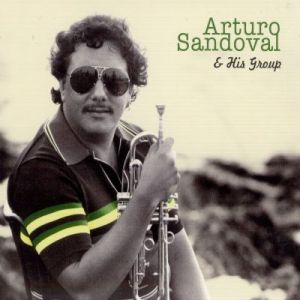
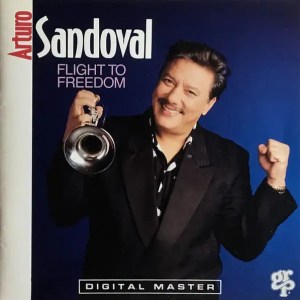
Jazz: A defining early U.S. release that showcases Sandoval’s technical brilliance and emotional range, blending straight-ahead jazz with his Cuban roots.
Where orchestral grace meets irresistible Afro-Cuban grooves. A Grammy winner for Best Latin Jazz Performance, this sound is pure energy and elegance in motion.
Named after a classic bebop standard, this project brims with driving tempos and improvisational fire. Hot House earned a Grammy Award for Best Latin Jazz Performance, solidifying its place as a high-energy homage to the genre’s roots and evolution.
The Rhetorical Review is built on the belief that local theatre, art, and storytelling deserve thoughtful, accessible, and independent coverage.
Every review, interview, and feature takes time, energy, and money to produce. Attending performances often means travel costs, parking fees, research time, and hours spent writing and editing with care.
Many local artists and productions do not receive the coverage or visibility they deserve, and The Rhetorical Review exists to help amplify those voices and preserve Utah’s artistic and cultural conversations.
Your support helps make this work possible. Even a $1 donation on Venmo helps sustain independent arts criticism and keeps this writing available to the community.
Keola received her undergraduate degrees from Brigham Young University of Hawai’i in English and music and then went on to study English literature at Weber State University for her master’s degree. She is currently pursuing her doctorate in Writing and Rhetoric Studies at the University of Utah.
Rhetorical Review is built on the belief that local theatre, art, and storytelling deserve thoughtful, accessible, and independent coverage.
Every review, interview, and feature takes time, energy, and money to produce. Attending performances often means travel costs, parking fees, research time, and hours spent writing and editing with care.
Many local artists and productions do not receive the coverage or visibility they deserve, and we exist to help amplify those voices and preserve artistic and cultural conversations.
Your support helps make this work possible. Even a $1 donation on Venmo helps sustain independent arts criticism and keeps this writing available to the community.





Leave a Reply